Quick Answer
The Kailasa Temple at Ellora is one of the world's largest monolithic monuments, carved entirely from a single basalt rock. Most historians believe it was commissioned by Rashtrakuta king Krishna I in the 8th century CE. While legends describe divine assistance, archaeological evidence points to extraordinary planning, skilled craftsmanship, and decades of dedicated labour.
The Story
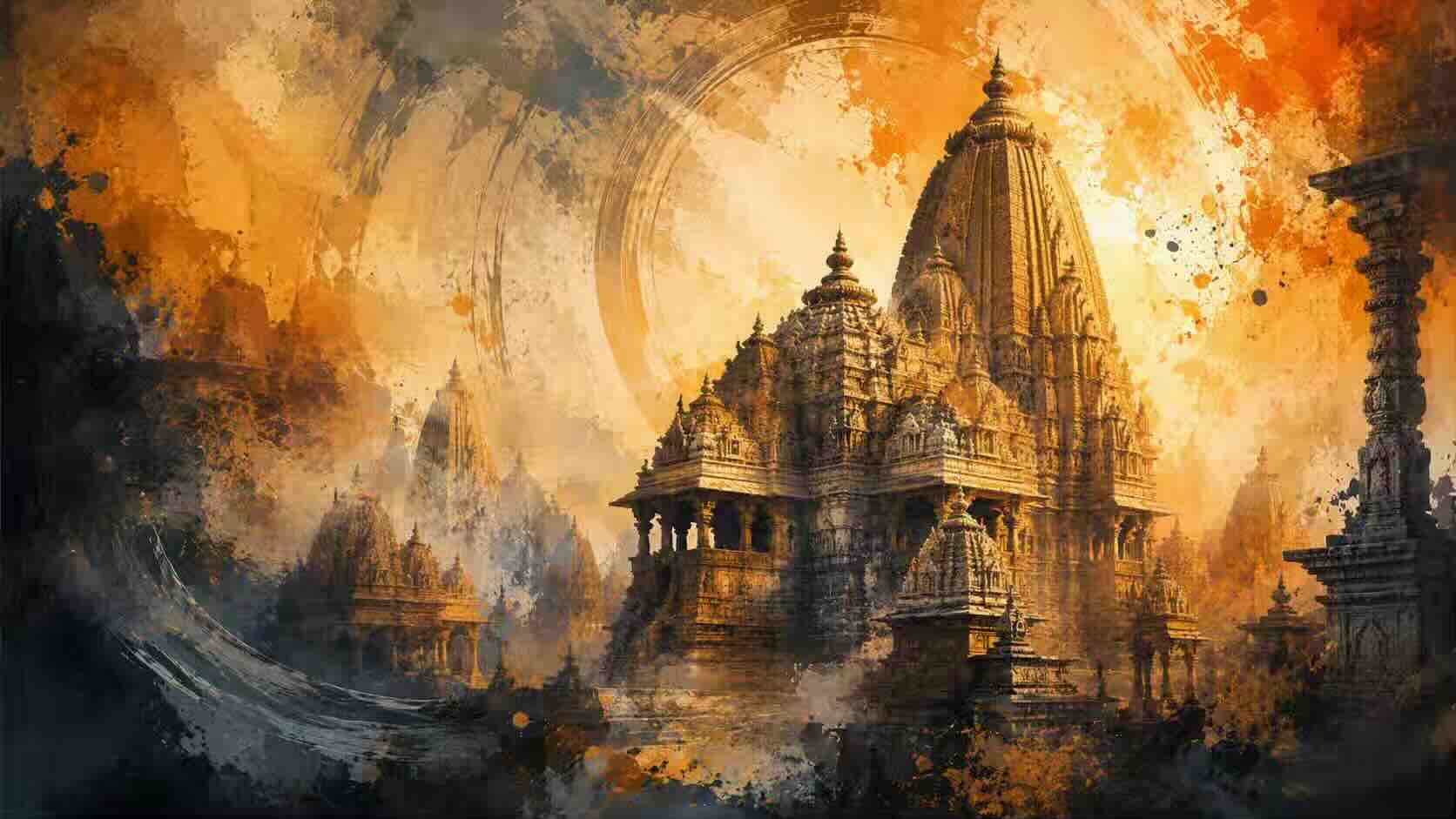
Located within the Ellora Caves in present-day Maharashtra, the Kailasa Temple is dedicated to Lord Shiva. It is generally dated to the reign of King Krishna I (c. 756-773 CE) of the Rashtrakuta dynasty, based on inscriptions and historical studies.
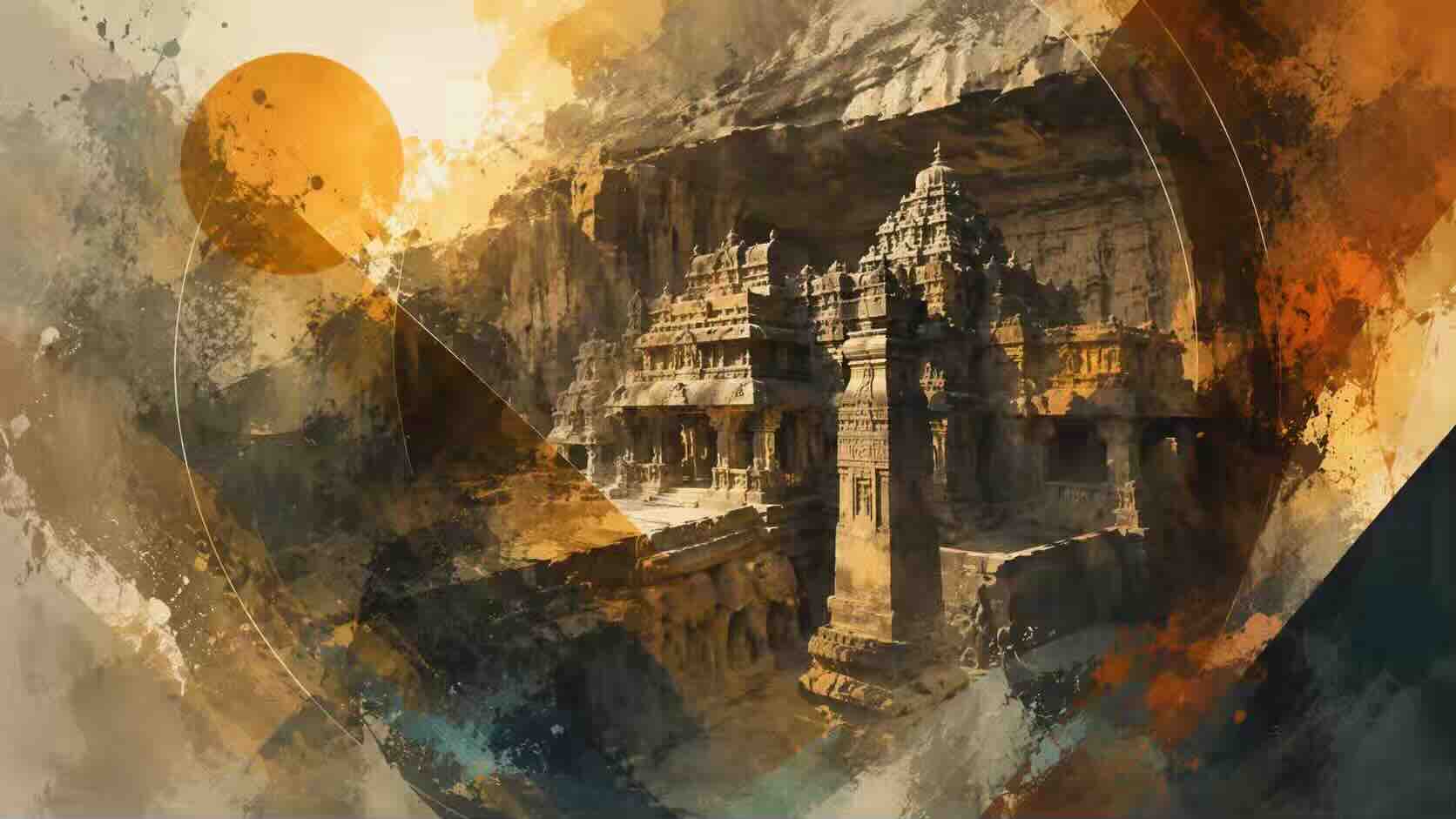
Unlike conventional temples that are built by assembling stones, the Kailasa Temple was created by removing rock from a massive hill. Craftsmen began at the top and gradually carved downward, ensuring that every pillar, shrine, staircase, sculpture, and courtyard emerged from the same rock.
Traditional legends offer a different perspective. One popular story tells of a queen who vowed to fast until she saw the temple's shikhara. To fulfil her vow, an architect began carving from the top so that the temple's crown appeared first. While this tale remains part of local tradition, historians regard it as a legend rather than documented history.
Although the exact construction period remains uncertain, scholars generally believe that the project likely took several decades and involved thousands of skilled artisans, sculptors, engineers, and labourers.
The Architecture
The most astonishing feature of the Kailasa Temple is its monolithic construction. The entire complex, including the main shrine, towering gateway, mandapas, pillars, sculptures, bridges, and the famous Nandi Mandapa, was carved from one continuous rock.
Covering roughly 60 meters in length, 33 meters in width, and over 30 meters in height, the temple is decorated with intricate sculptures depicting scenes from the Ramayan, Mahabharat, and Shaiva traditions. Massive stone elephants appear to support the structure, while beautifully carved panels display remarkable artistic precision.
Even with modern technology, reproducing such a monument using the same technique would be an enormous engineering challenge.
Did You Know?
Although the Kailasa Temple is often described online as an "unsolved mystery," archaeologists generally agree on how it was carved, from the top downward using iron tools and careful planning. The real wonder is not that it is inexplicable, but that ancient craftsmen successfully executed such an ambitious project with the technology available at the time.
Why It Matters
The Kailasa Temple represents the extraordinary achievements of Ancient Bharat in architecture, engineering, mathematics, and sculpture. It reflects the mastery of its artisans and the sophisticated understanding of rock-cut construction.
Today, as part of the UNESCO World Heritage-listed Ellora Caves, it attracts visitors from around the world and continues to inspire architects, historians, artists, and devotees alike. It stands as a reminder that patience and planning can create works that endure for more than a thousand years.
References
- Archaeological Survey of India (ASI): Ellora Caves (official archaeological documentation)
- UNESCO World Heritage Centre: Ellora Caves nomination and conservation records
- Ellora Inscriptions (Rashtrakuta period), especially references associated with King Krishna I