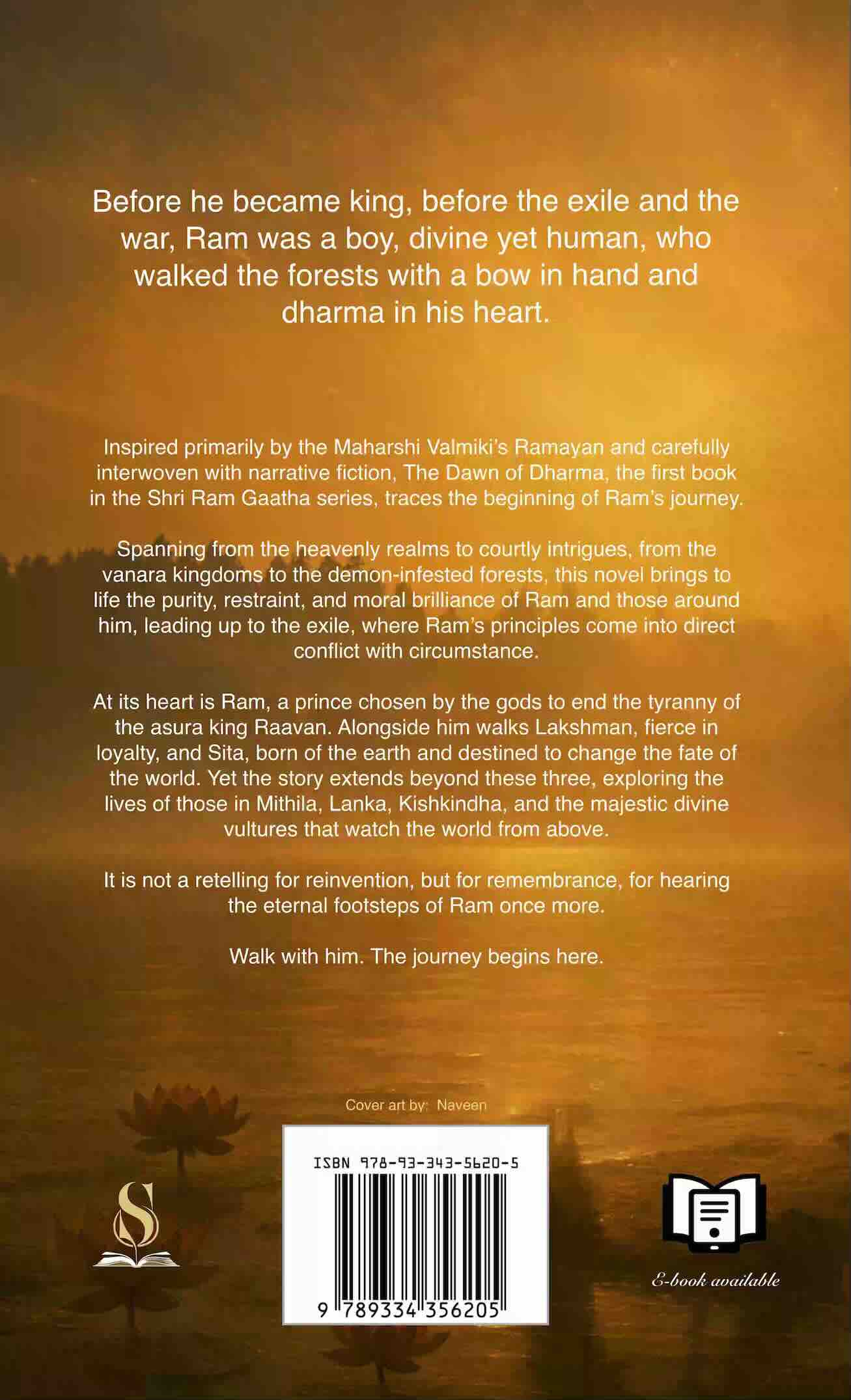
About the Book
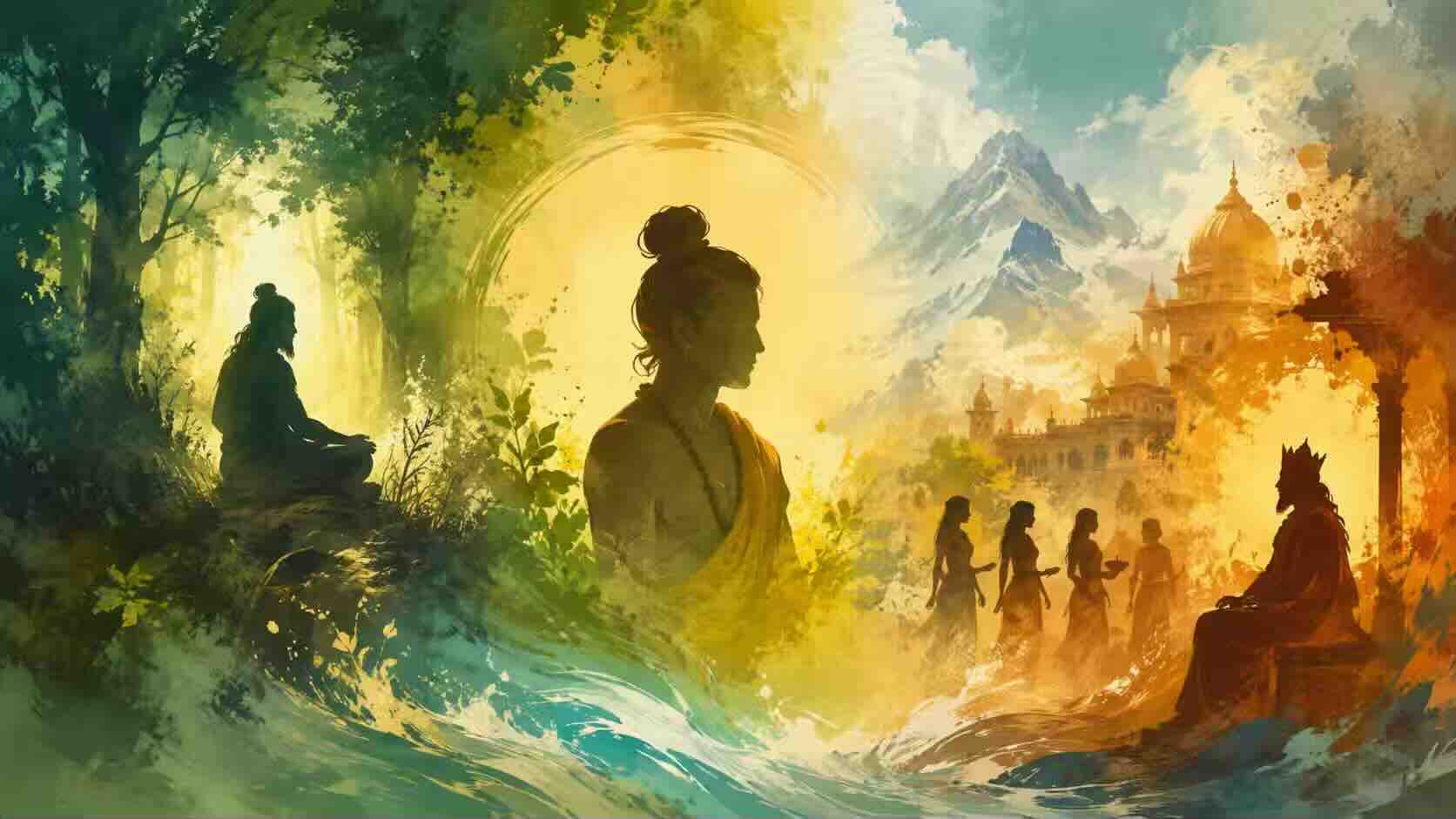
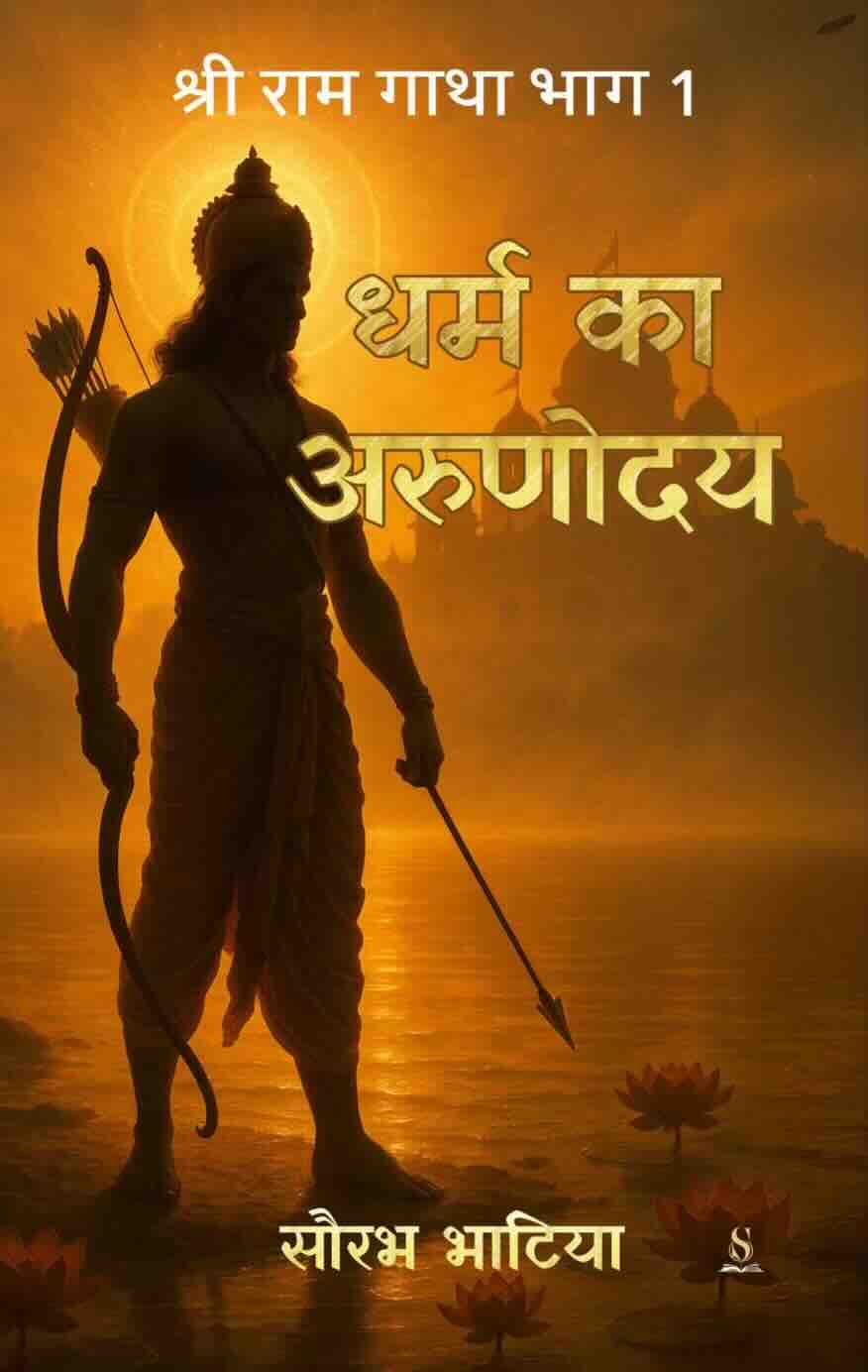
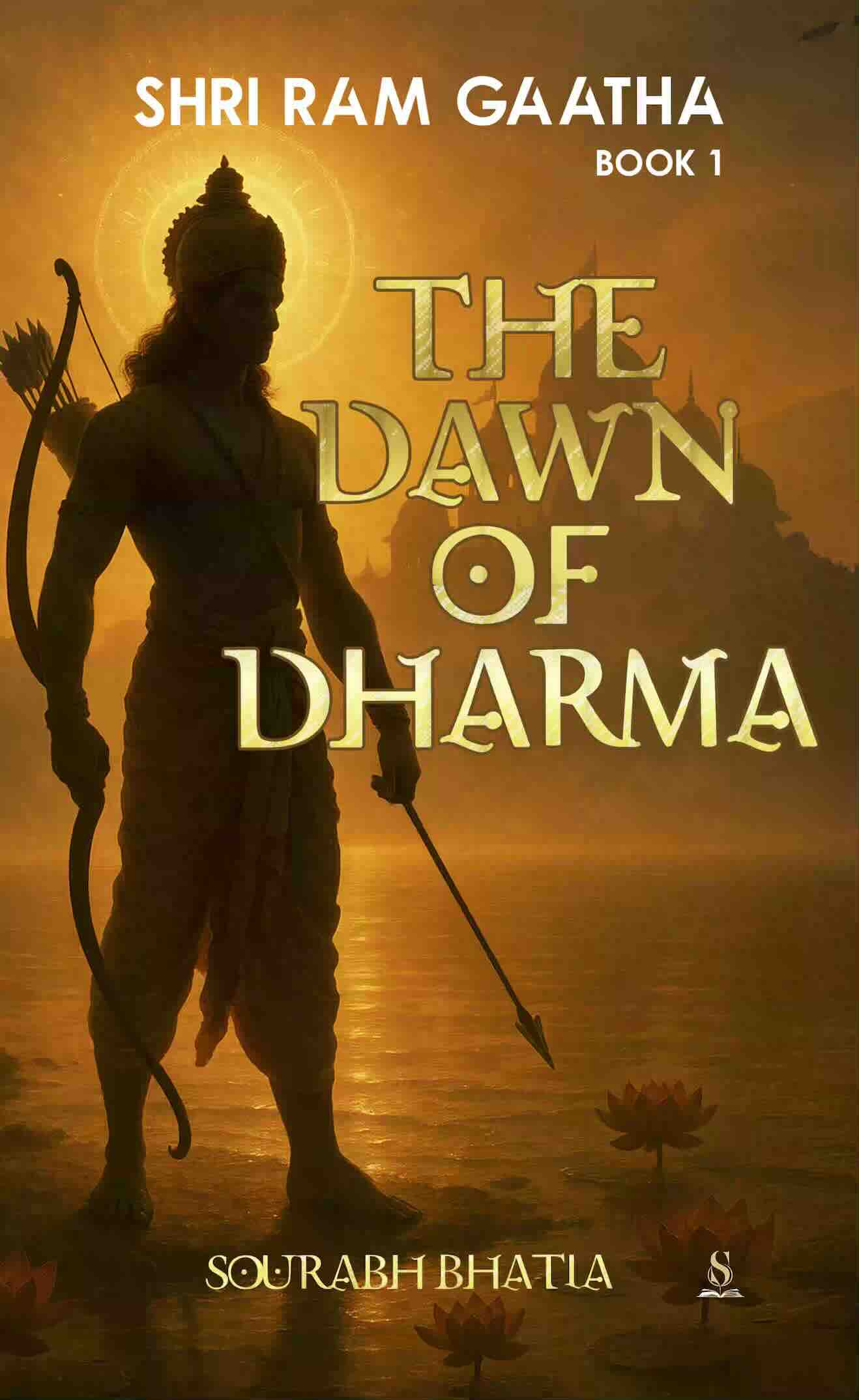
In the vast landscape of Indian mythology, few narratives have shaped the moral and cultural fabric of Ancient Bharat as deeply as the life of Ram. Yet, long before he was worshipped as a deity or sat upon the golden throne of Ayodhya, he was a young prince navigating the complexities of human existence. The Dawn of Dharma, the introductory volume in the Shri Ram Gaatha series, is a Valmiki Ramayan inspired novel that traces the formative chapters of this timeless journey. Designed not as a reinvention but as an immersive piece of mythological fiction, it stays rooted in traditional scripture while bringing the psychological depth of its characters to life.
In the northern kingdom of Ayodhya, King Dashrath incurs an unbreakable debt when Princess Kaikeyi saves his life twice in battle against demons. Bound by honour, he vows to grant her two boons. Years later, still childless, he performs the great Ashvamedha sacrifice under the guidance of his royal guru Vasishtha and the priesthood of Sage Rishyashringa, once lured from his forest hermitage by the king of Anga.
In drought-stricken Mithila, King Janak's relentless efforts to save his land lead him to perform a yajna to honour the earth. While ploughing the parched fields, he discovers a miraculous child, Sita, whose arrival brings rain back to the kingdom.
Far to the south, Raavan, the ten-headed demon lord, rules Lanka with terror. His demons spread across Bharatvarsha, desecrating yajnas and driving sages from their ashrams. Alarmed, the gods decree that Lord Vishnu must descend in human form to end Raavan's tyranny, exploiting the one gap in the demon king's boon of invincibility.
Dashrath's sacrifice blesses him with four sons: Ram, Bharat, Lakshman, and Shatrughna. Ram, the eldest, possesses rare virtues that set him apart for a purpose greater than kingship. Born of the earth itself, Sita grows into extraordinary beauty and wisdom. Janak proclaims the challenge for her marriage: whoever can lift and string Lord Shiva's massive bow will win her hand. When assembled kings fail, their wounded pride unites them in a year-long siege of Mithila. Janak's faith, his brother Kushdhvaj's valour, his people's loyalty, and divine protection break the blockade, proving that righteousness prevails.
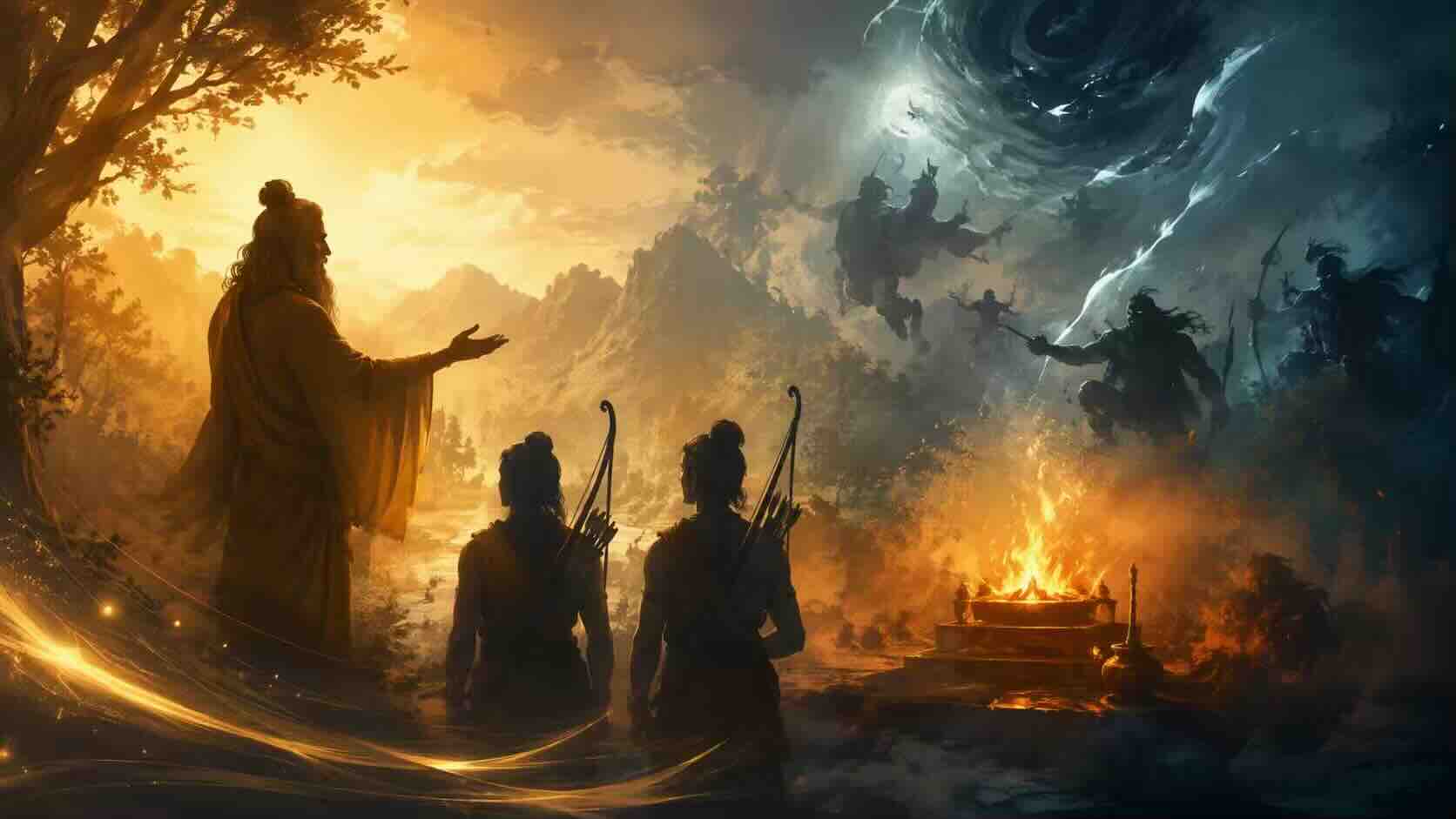
When Raavan's attacks reach the northern forests, Sage Vishvamitra arrives in Ayodhya to seek Ram and his devoted brother Lakshman's help. The brothers' first battles, against Tataka, Mareech, and Subahu, announce Ram as dharma's chosen champion and stir unease in Lanka. As a reward, Vishvamitra grants Ram the knowledge of celestial weapons and leads the princes towards Mithila. Along the way, he recounts his own journey from warrior king to ascetic sage, leaving the brothers amazed.
Meanwhile, tales of brotherhood unfold elsewhere. On the Himalayan heights, the vulture brothers Sampati and Jatayu test their wings against the sun; Sampati burns his own to save Jatayu, dooming himself to earthbound exile. In Kishkindha, the vanara king Vali enters a cavern to battle a demon while his brother Sugreev waits outside.
Ram and Lakshman's journey leads them eventually to Mithila. It is here that Ram meets Sita. In a moment of sheer moral and physical alignment, Ram lifts and strings the massive weapon, breaking it in the process. This event culminates in his marriage to Sita and is soon followed by the tense arrival of the angry sage Parashurama, whose anger is cooled by Ram's composure.
In Kishkindha, when Vali does not return for a year, Sugreev assumes his death and takes the crown. But Vali's victorious return sparks feelings of betrayal, and he banishes Sugreev. Hanuman and a handful of ministers and soldiers accompany him into exile as his protectors. In Dandak forests, Raavan's commanders sense a new energy among the sages. Though vastly outnumbered, the holy men begin to resist, their courage unsettling the forces of darkness.
Back in Ayodhya, the joy of the unions in Mithila is short-lived upon their return to Ayodhya. The transition from peaceful domesticity to political intrigue is swift. As Dashrath prepares to crown Ram as the heir apparent, ancient promises are invoked. Moved by courtly influences, Queen Kaikeyi demands two boons that shatter the peace of the royal family: the coronation of her son Bharat and the fourteen-year exile of Ram. In this ultimate test of character, Ram chooses to honour his father's vows without resentment. He prepares to step down from the throne and enter the forest, accompanied by the devoted Sita and loyal Lakshman.
As the volume closes, the trio crosses the door, leaving behind the safety of their home to embrace the unknown path of exile. The Dawn of Dharma successfully captures the transition from prince to protector. In doing so, it sets the stage for the conflicts that will eventually reach the shores of Lanka and the kingdoms of Kishkindha. This novel invites readers to hear the eternal footsteps of Ram once more, exploring the cost of duty and the true meaning of dharma.