Quick Answer
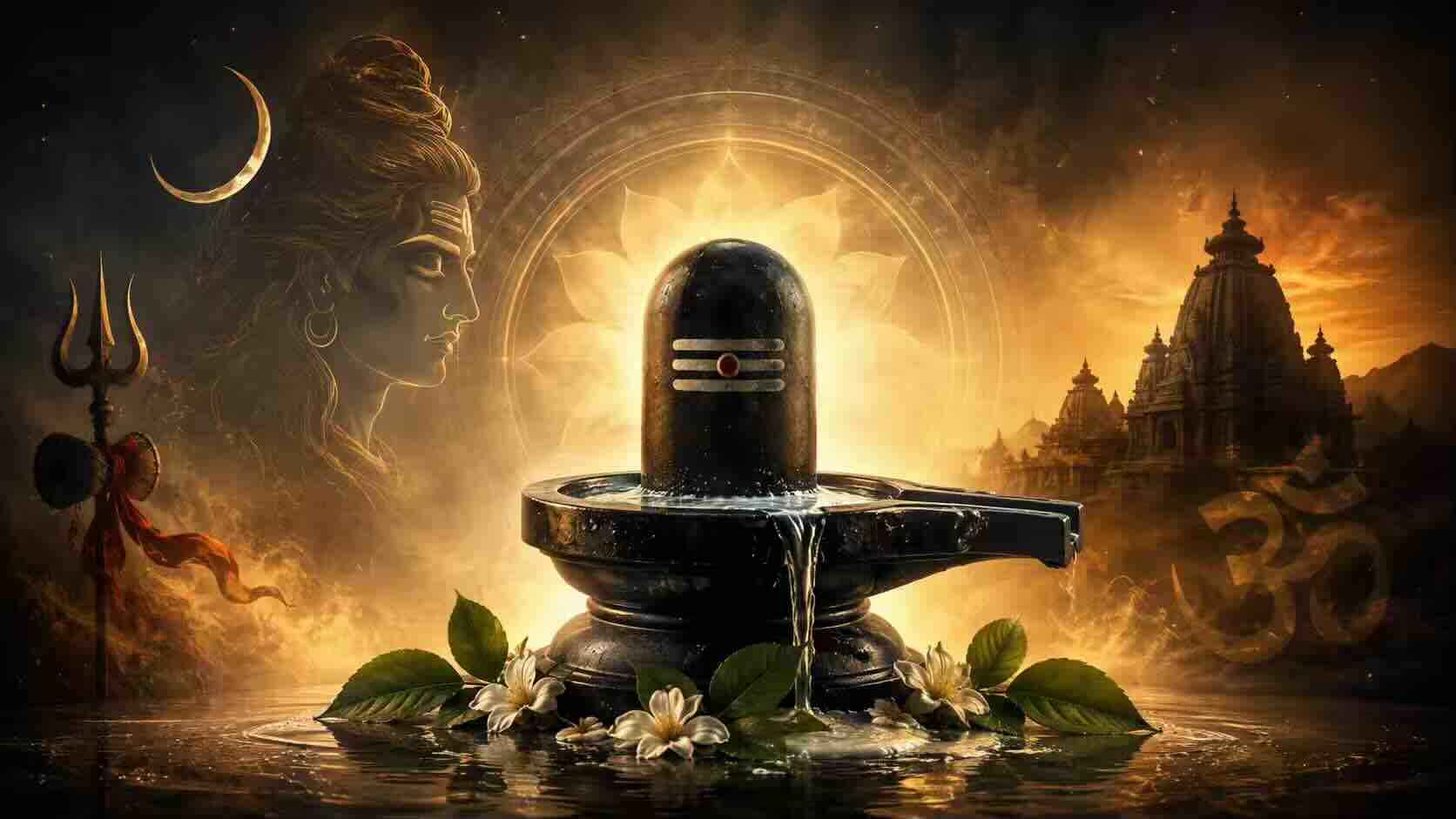
A Shivalingam (or Shiva Linga) is one of the most sacred symbols of Lord Shiva in Hinduism. Rather than representing a human form, it symbolises Shiva's infinite, formless nature, the cosmic source of creation, preservation, and transformation. While different traditions interpret its symbolism differently, it is primarily revered as a representation of the Supreme Reality beyond physical form.
The Story
The Sanskrit word "Linga" means "mark," "sign," or "symbol." In Hindu philosophy, the Shivalingam is understood as the symbol through which the invisible and infinite Shiva is worshipped.
One of the best-known legends comes from the Linga Purana and is also narrated in the Shiva Purana. According to this tradition, Lord Shiva appeared as an endless pillar of divine light before Brahma and Vishnu. Unable to find either its beginning or its end, both deities realised that Shiva's true nature was infinite and beyond human comprehension. The Shivalingam is believed to represent this eternal pillar of light, known as the Jyotirlinga.
Many Shivalingams are placed within a circular base called the Yoni, symbolising Shakti, the divine feminine energy. Together, they represent the harmony of consciousness (Shiva) and creative energy (Shakti), a central concept in Hindu philosophy.
Did You Know?
- The twelve Jyotirlingas are considered the holiest shrines dedicated to Lord Shiva.
- Most ancient Shiva temples place the Shivalingam in the garbhagriha (sanctum sanctorum), the spiritual heart of the temple.
- The word "Linga" originally means "symbol" or "mark," not merely an object of worship.
Why It Matters Today
The Shivalingam continues to be worshipped daily in temples and homes across India and around the world. Devotees offer water, milk, bilva leaves, flowers, and prayers, especially during Mahashivaratri and the holy month of Shravan.
Beyond ritual worship, the Shivalingam reminds devotees that the Divine cannot always be confined to a physical image. It represents eternity and the balance between creation and dissolution, ideas that remain deeply meaningful in modern spiritual life.
References
- Shiva Purana (translated editions by J. L. Shastri, Motilal Banarsidass).
- Linga Purana (translated editions by J. L. Shastri, Motilal Banarsidass).