Quick Answer
Kedarnath Temple remains open for only about six months each year because of the harsh Himalayan winter. Heavy snowfall makes the region inaccessible from around November to April. During this period, the temple is ceremonially closed, and the worship of Lord Shiva continues at the Omkareshwar Temple in Ukhimath until the shrine reopens in late spring.
The Story
Kedarnath is one of the twelve Jyotirlingas and one of the holiest temples dedicated to Lord Shiva. The Pandavas visited Kedarnath after the Mahabharat war to seek forgiveness from Lord Shiva. Shiva, unwilling to meet them immediately, took the form of a bull. When discovered, he disappeared into the earth, leaving behind his hump at Kedarnath. Other parts of his form are traditionally associated with four nearby temples, together known as the Panch Kedar.
Historically, the present stone temple is generally attributed to the early medieval period, though many traditions credit the philosopher Adi Shankaracharya with restoring or reviving the shrine in the 8th century CE.
Every year, the temple opens around April or May on the auspicious occasion of Akshaya Tritiya and closes around October or November after Diwali, before heavy snowfall begins.
The Architecture
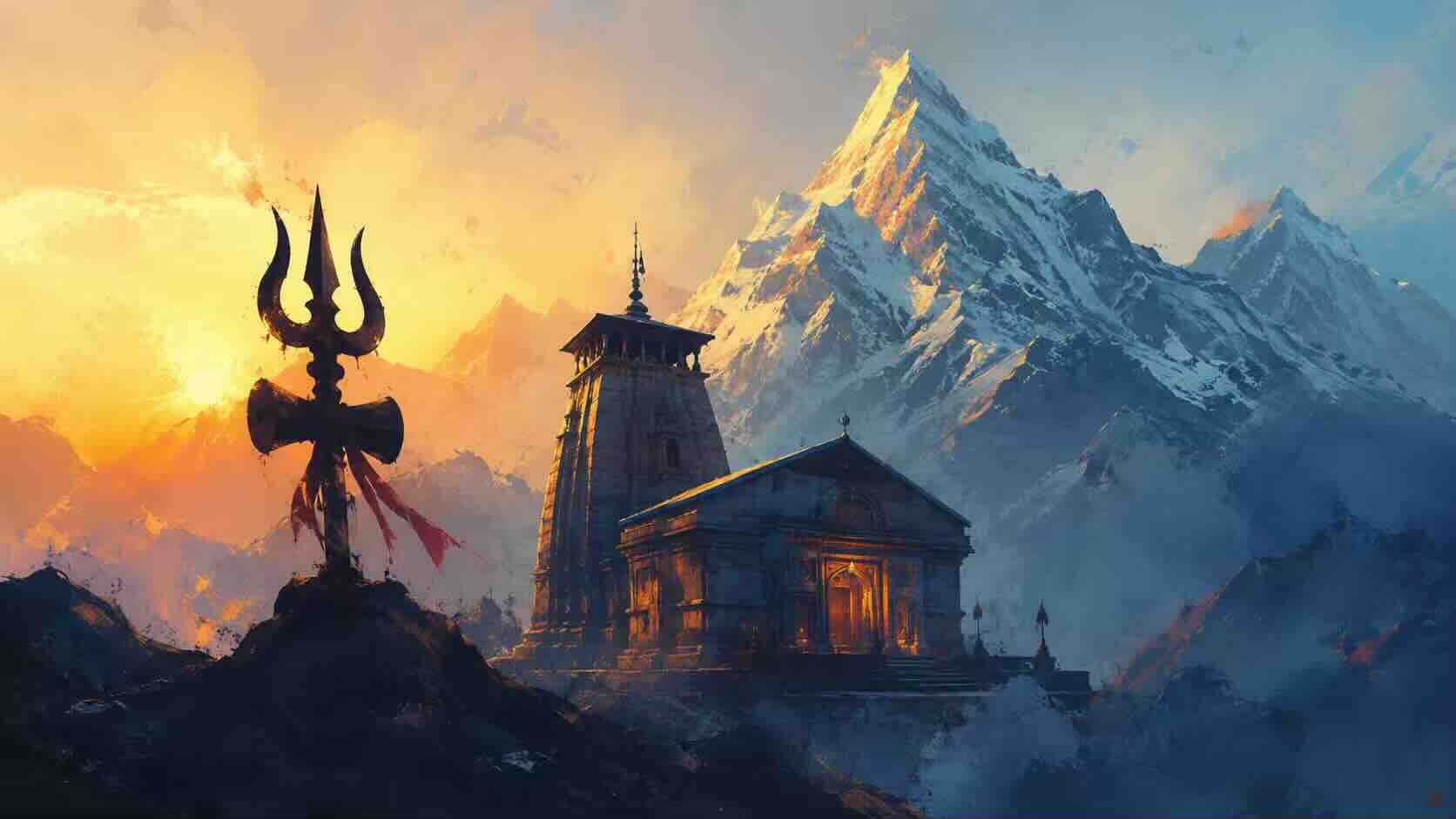
Built at an altitude of about 3,583 meters (11,755 feet), Kedarnath Temple is an extraordinary example of Himalayan stone architecture. Massive interlocking stone blocks form its walls without the use of modern cement, allowing the structure to withstand extreme weather for centuries.
The temple's elevated stone platform and sturdy construction have contributed to its remarkable durability, even during the devastating 2013 Uttarakhand floods.
Did You Know?
When Kedarnath Temple closes for winter, the temple's sacred idol is ceremonially carried to Omkareshwar Temple in Ukhimath. Worship continues there throughout the winter months until the idol returns to Kedarnath in the following spring.
Why It Matters
Kedarnath represents both spiritual devotion and human resilience. The annual opening and closing of the shrine reflect the rhythm of life in the Himalayas, where nature determines the pilgrimage season. For millions of devotees, the journey is not only an act of worship but also a reminder of faith, perseverance, and respect for the mountains.
References
- Kedara Khanda of the Skanda Purana
- Mahabharat, Vana Parva (traditions relating to the Pandavas and Shiva)
- Archaeological Survey of India (ASI) records on Kedarnath Temple