Quick Answer
The Jagannath Rath Yatra is one of the world's largest chariot festivals because it combines centuries-old religious traditions, monumental wooden chariots, and the participation of millions of devotees. Held annually in Puri, Odisha, the festival symbolises Lord Jagannath's public journey, making divine worship accessible to everyone, regardless of social background.
The Story
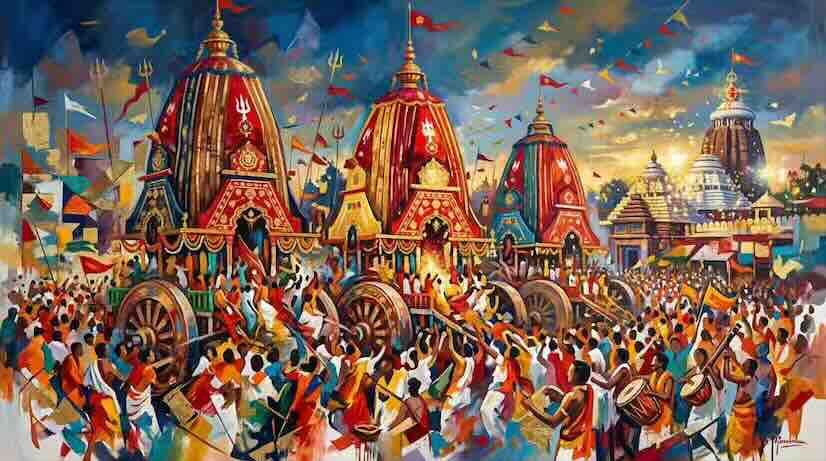
Every year, during the Hindu month of Ashadha (June-July), the deities Lord Jagannath, His elder brother Balabhadra, and sister Subhadra leave the sanctum of the Jagannath Temple and travel in grand wooden chariots to the Gundicha Temple, about three kilometers away.
This journey commemorates Lord Jagannath's annual visit to the Gundicha Temple, which is regarded as the home of His aunt. Devotees believe that during this procession, the Lord comes out of the temple to bless everyone, including those who may not be able to enter the shrine.
Historical records indicate that the Rath Yatra has been celebrated for many centuries. The festival gained royal patronage under the Eastern Ganga rulers, who expanded the Jagannath Temple and promoted its rituals across eastern India. Today, it attracts millions of pilgrims, making it one of the largest annual religious gatherings in the world.
The Architecture
One of the most remarkable features of the Rath Yatra is the construction of its three gigantic wooden chariots.
Every year, new chariots are built from freshly selected timber using traditional methods. No old chariots are reused. Skilled hereditary carpenters follow measurements and construction techniques preserved through generations.
Each deity has a separate chariot:
- Nandighosha (Lord Jagannath) : 16 wheels
- Taladhwaja (Lord Balabhadra) : 14 wheels
- Darpadalana (Goddess Subhadra) : 12 wheels
The construction begins on Akshaya Tritiya and follows long-established temple traditions, making the chariots remarkable examples of India's living architectural and craftsmanship heritage.
Did You Know?
Before the procession begins, the Gajapati King of Puri performs the ceremonial Chhera Pahanra, sweeping the chariots with a golden broom. This centuries-old ritual symbolises that everyone, including the king, is equal before Lord Jagannath.
Why It Matters
The Rath Yatra represents the idea that the divine reaches out to all people, not just those inside the temple.
It is also a powerful expression of community participation. Thousands of artisans, priests, musicians, volunteers, and devotees work together to organise the festival each year.
References
- Skanda Purana : Purushottama Mahatmya (describes Lord Jagannath, Puri, and the Rath Yatra tradition).
- Brahma Purana : Chapters relating to Purushottama Kshetra.
- Madala Panji : The traditional temple chronicle of the Jagannath Temple, Puri.
- Archaeological Survey of India (ASI) : Historical records and conservation reports on the Jagannath Temple.
- Epigraphia Indica : Inscriptions relating to the Eastern Ganga dynasty and Jagannath Temple.