Quick Answer
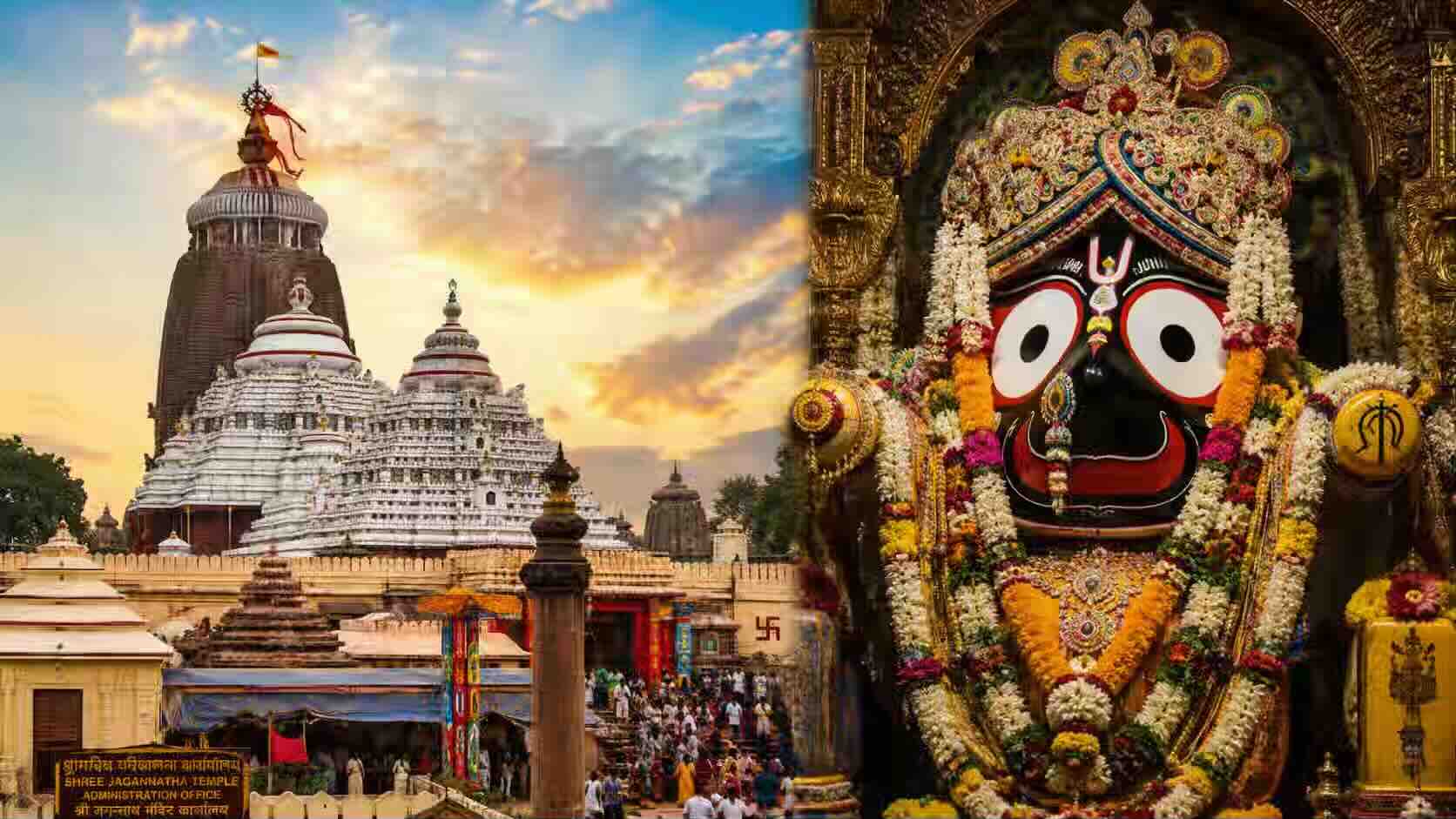
Lord Jagannath is depicted with large, round, unblinking eyes as a symbol of His all-seeing and ever-watchful nature. According to Hindu tradition, these eyes represent the Lord's boundless compassion and constant awareness of all beings. While this symbolism comes from religious belief, historians also recognise the image as a distinctive artistic tradition that evolved in Odisha.
The Story
One popular tradition connects this form to King Indradyumna, who wished to install a divine image of Lord Vishnu. According to the legend, the celestial craftsman Vishwakarma agreed to carve the deity on one condition, that he would work in complete isolation and not be disturbed.
Unable to control his curiosity, the king opened the workshop before the image was finished. Vishwakarma disappeared, leaving the idols incomplete. Their unfinished appearance, including the large eyes and simplified limbs, was accepted as the Lord's chosen form.
Another devotional tradition explains the large eyes differently. It says that Lord Krishna became overwhelmed with divine joy while listening to stories of His devotees, causing His eyes to widen in eternal bliss. This interpretation is especially popular in Vaishnav traditions.
The Architecture
The idols of Jagannath, Balabhadra, and Subhadra are carved from sacred neem wood (Daru), making them unlike the stone images found in most major Hindu temples.
An extraordinary feature of the tradition is the Nabakalebara ceremony, during which the wooden idols are ceremonially replaced after specific astronomical calculations. This centuries-old ritual preserves both the physical form of the deities and the continuity of temple traditions.
The temple itself, built in the Kalinga architectural style, is renowned for its towering Shikhara, monumental gateways, and intricate stone carvings that reflect the architectural excellence of medieval Odisha.
Did You Know?
The sacred wooden idols of Lord Jagannath are not permanent. During the rare Nabakalebara ceremony, new idols are carved from specially identified neem trees following elaborate rituals, while the old idols are ceremonially interred within the temple complex.
Why It Matters
Lord Jagannath's distinctive appearance reminds devotees that divinity is not confined to conventional artistic ideals. His form emphasises compassion and accessibility rather than physical perfection.
The Jagannath tradition has also played a major role in shaping Odisha's cultural identity. The annual Rath Yatra continues to attract millions of pilgrims and visitors from around the world, making the temple one of India's most significant living heritage sites.
References
- Skanda Purana : Purushottama Mahatmya (describes the sacred significance of Purushottama Kshetra and Jagannath worship).
- Brahma Purana : Sections relating to Purushottama Kshetra.
- Madala Panji : The traditional temple chronicle of the Jagannath Temple, Puri.
- Archaeological Survey of India (ASI) : Records and conservation reports on the Jagannath Temple.
- Epigraphia Indica : Inscriptions relating to the Eastern Ganga dynasty and the temple.