Quick Answer
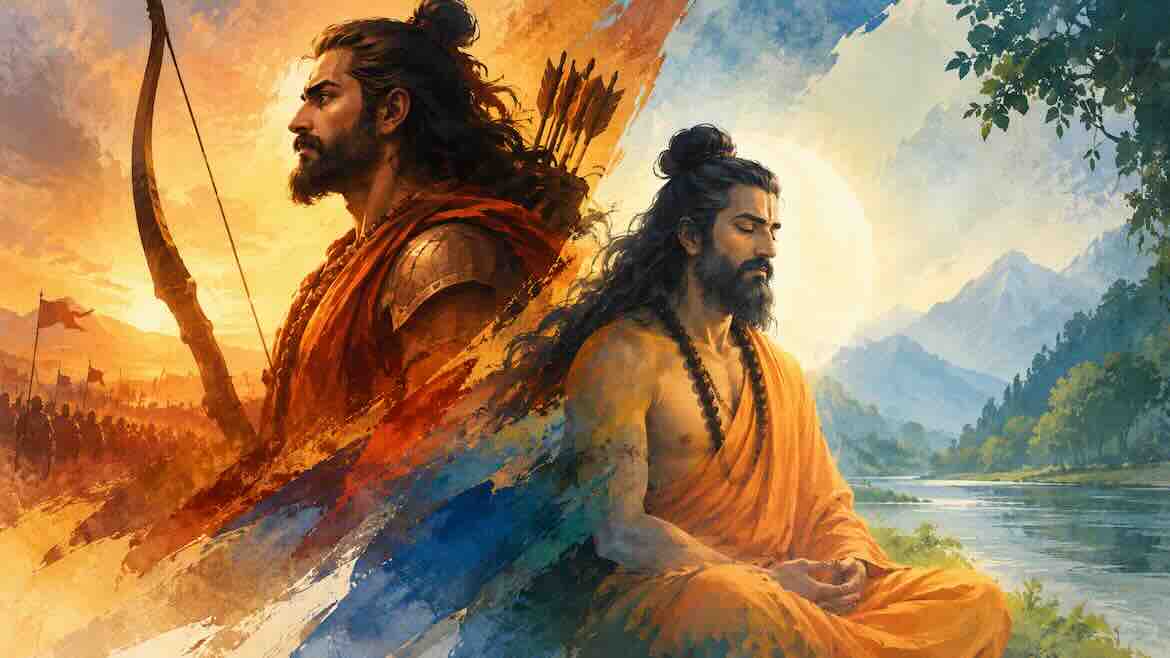
Vishvamitra was originally a powerful Kshatriya king named Kaushik, the son of King Gadhi. His encounter with Sage Vasishtha changed the course of his life. After witnessing the spiritual power of Vasishtha, Kaushik renounced his kingdom and undertook severe austerities. After years of struggle, failure and self-discipline, he attained the status of a Brahmarshi, becoming one of the most revered sages in the Ramayan.
The Story
Vishvamitra was born into the royal lineage of Kushik and became a mighty king. During one of his journeys, he visited the hermitage of Sage Vasishtha. Vasishtha welcomed the king and his entire army with extraordinary hospitality through his divine cow, Shabala, also known as Kamadhenu.
Impressed by Shabala's power, Vishvamitra wanted to take her with him. Vasishtha refused, explaining that she belonged to the hermitage and could not be exchanged even for enormous wealth. Vishvamitra tried to take her by force, but Shabala produced powerful forces that defeated his army and killed his sons.
Realising that the power of a sage could surpass even the might of a king, Vishvamitra began a long journey of austerity. He obtained the divyastras through his penance and returned to confront Vasishtha, but Vasishtha defeated all his weapons, including the Brahmastra, with his Brahmadanda, the spiritual power of his sacred staff. Vishvamitra then understood that true mastery required more than military strength.
He renounced his royal life and devoted himself to tapasya. His journey was not easy. Lord Brahma successively recognised his progress, but Vishvamitra continued seeking the highest state. He was tested by desire and anger. Menaka distracted him from his austerities, while later he cursed Rambha in anger and realised that he still had to conquer his own emotions.
Vishvamitra also became known for extraordinary acts of spiritual power. He supported Trishanku and attempted to send him to heaven in his physical body, even beginning a new cosmic creation when Indra rejected Trishanku. He also protected Shunahshep and accepted him into his family tradition.
Finally, after prolonged austerity and complete mastery over the qualities that had once disturbed him, Brahma recognised Vishvamitra as a Brahmarshi. Yet Vishvamitra wanted recognition from the very sage whose spiritual power had inspired his transformation. Vasishtha finally acknowledged him as a Brahmarshi and made peace with him.
The title Brahmarshi represents the highest level of sagehood in this account. Vishvamitra's achievement was therefore not merely gaining spiritual powers. It was his transformation from a warrior-king driven by pride and rivalry into a sage who had conquered himself.
Did You Know?
- Vishvamitra is also called Kaushik, reflecting his lineage from Kushika.
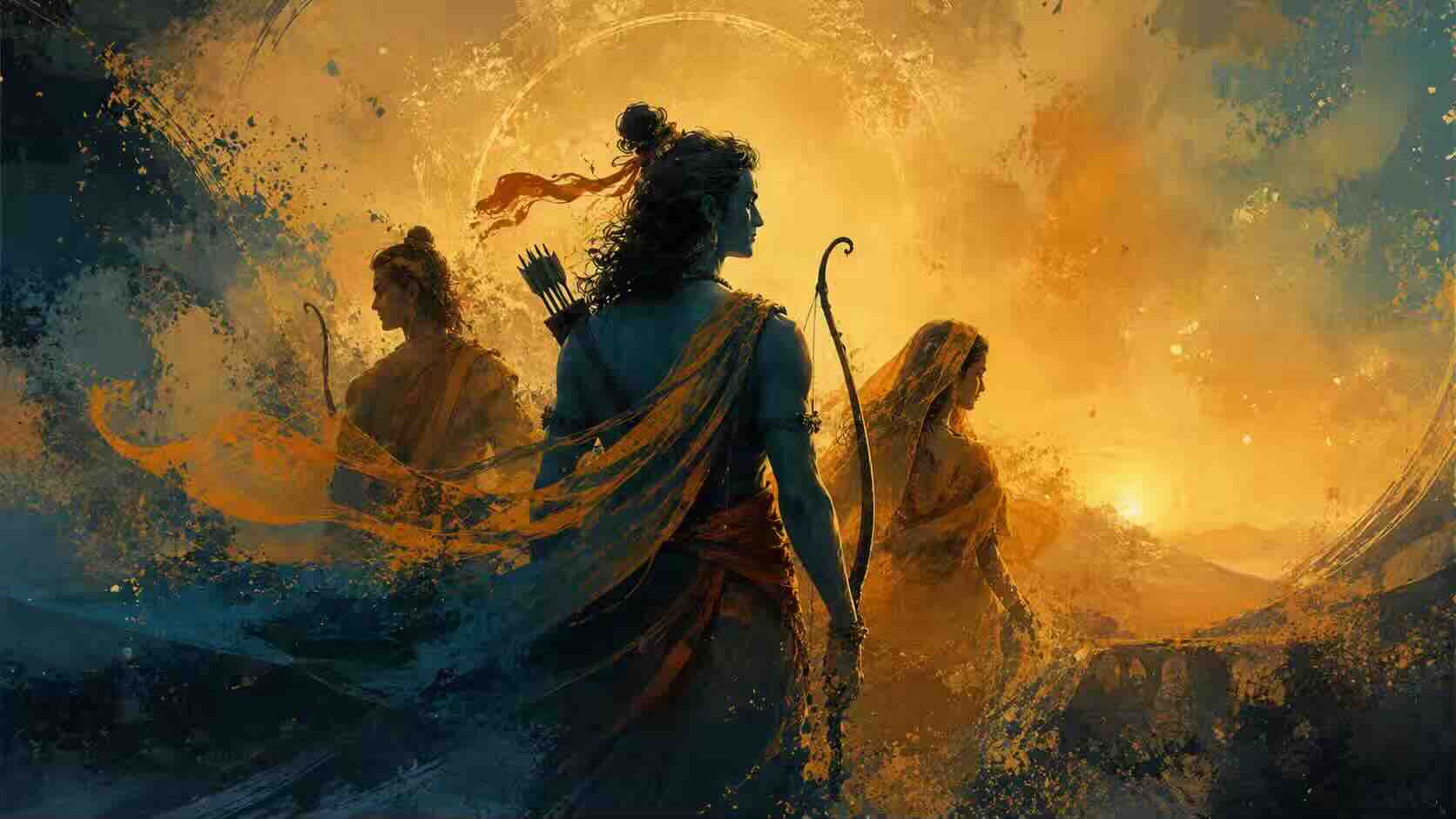
- In the Valmiki Ramayan, Vishvamitra later becomes the teacher and guide who takes Ram and Lakshman with him to protect his sacrifice.
- Vishvamitra gives Ram knowledge of powerful divine weapons and teaches him important stories and traditions during their journey.
- He is the sage who brings Ram to Mithila, where Ram eventually encounters the great bow of Shiva and Sita's svayamvara.
Why It Matters Today
Vishvamitra's story teaches that transformation is not achieved merely by changing one's surroundings. He had to confront the same anger, desire, pride and impatience within himself again and again.
His journey also shows that failure does not have to be the end of growth. Every defeat became a reason for deeper discipline. The king who once measured strength through armies eventually learned that the hardest battle was the battle within.
References
- Valmiki Ramayan
- Bal Kand, Sargas 52-55, for Vishvamitra's encounter with Vasishtha, Shabala and the destruction of his army.
- Bal Kand, Sargas 57-60, for Vishvamitra and Trishanku.
- Bal Kand, Sarga 61, for the story of Shunahshep.
- Bal Kand, Sargas 63-64, for Menaka, Rambha and Vishvamitra's continuing austerities.
- Bal Kand, Sarga 65, for Vishvamitra attaining Brahmarshi status and Vasishtha acknowledging him as a Brahmarshi.
- Ramcharitmanas
- Bal Kand, for Vishvamitra's role in taking Ram and Lakshman to protect his sacrifice and guiding them towards Mithila.