Quick Answer
Sage Vishvamitra did not ask Lord Ram to protect his yajna because he lacked the strength to defeat the asuras. By that time, Vishvamitra had become a Brahmarshi after years of intense tapas and was one of the most powerful sages in the world. The Valmiki Ramayan describes him as the master of all hundred divine weapons (divyastras). However, while performing a yajna, a sage observing strict vows was not expected to abandon the ritual in anger or violence. More importantly, Vishvamitra recognised that Lord Ram's divine mission had begun. By entrusting the young prince with this task, he was preparing him to uphold dharma and introducing the world to its future protector.
The Story
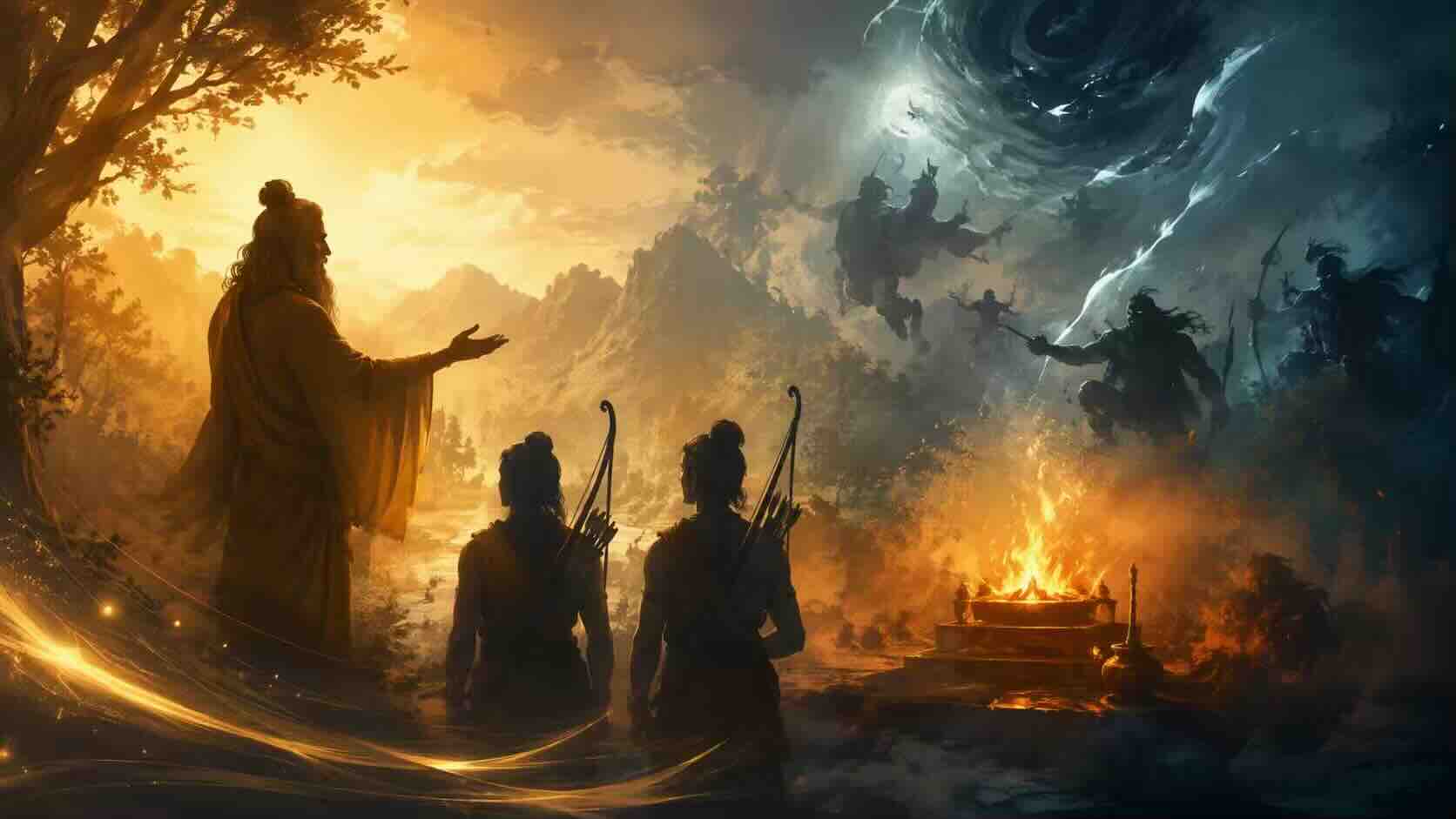
When Sage Vishvamitra arrived in Ayodhya and requested that young Ram accompany him, King Dashrath was shocked. The sage wanted the prince to defend his yajna from the asuras Mareech and Subahu, who repeatedly disrupted sacred rituals.
Dashrath found the request difficult to accept. Ram was still a young prince with little experience in battle. The king offered to send his own army instead, believing that such dangerous enemies should be faced by seasoned warriors.
But Vishvamitra had not come because he needed soldiers.
Once a mighty king himself, Vishvamitra had performed extraordinary tapas and earned the title of Brahmarshi. In the Valmiki Ramayan, Sage Vasishtha states that Vishvamitra possessed knowledge of all celestial weapons. Vishvamitra could even create astras that had not yet been known or revealed. After Ram agreed to accompany him, Vishvamitra personally bestowed many of these divine astras upon the prince, including powerful weapons associated with various deities, like Shiva's Trishul, Vishnu's Chakra, Indra's Vajra, and the Brahmastra. Few beings in the Ramayan possessed such mastery over celestial weapons.
If Vishvamitra was so powerful, why didn't he simply destroy the asuras himself?
The answer lies in the nature of the yajna. During the sacred sacrifice, Vishvamitra had undertaken vows of complete concentration and restraint. Breaking those vows to engage in battle would have defeated the very purpose of the sacrifice. A yajna demanded discipline, and the sage chose to remain devoted to it.
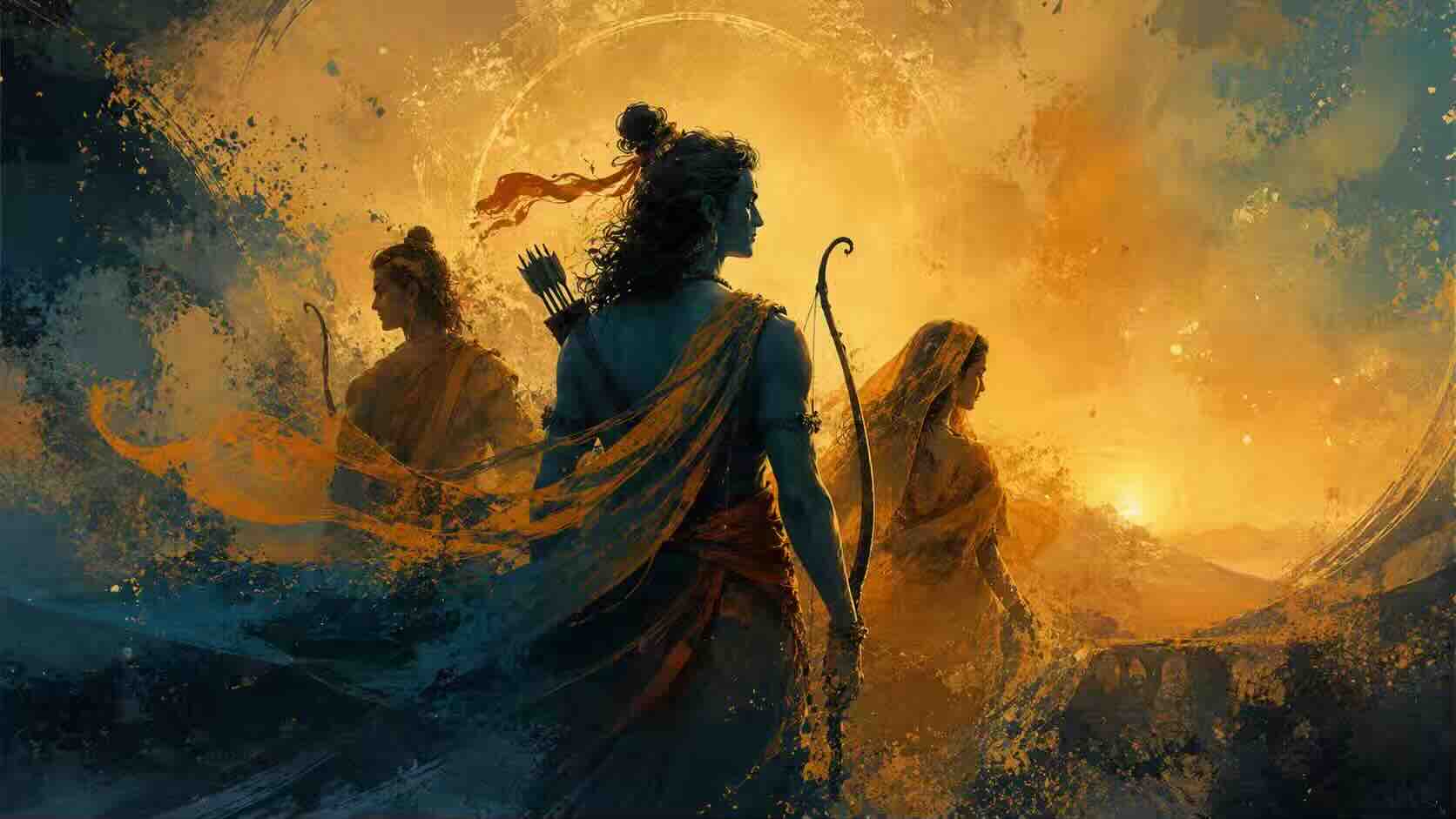
There was an even deeper reason, clearly mentioned in the Valmiki Ramayan. Vishvamitra understood that Ram was no ordinary prince. This was the moment for Ram to begin his public mission of protecting dharma. Because Lakshman was inseparable from his brother, he also joined the voyage. Under the sage's guidance, they first defeated Tadaka (Tataka), then protected the yajna by slaying Subahu and driving Mareech far away. The journey continued to Mithila, where Ram would break Shiva's bow and marry Sita, setting in motion the events that would eventually lead to the direct clash with Raavan.
Rather than displaying his own power, Vishvamitra chose to become the mentor who prepared the world's future protector.
Did You Know?
- Vishvamitra was originally a mighty king before becoming a Brahmarshi through intense tapas.
- Before the yajna, Vishvamitra taught Ram the divine mantras Bala and Atibala.
- Ram's victory over Tataka was his first major act of protecting dharma outside Ayodhya.
- After defeating Tataka, Ram received the knowledge of the divyastras from Vishvamitra.
- The journey with Vishvamitra eventually led Ram to Mithila, where he met Sita.
Why It Matters Today
This episode teaches that great teachers do not solve every problem themselves. Instead, they prepare the next generation to face challenges with wisdom and courage.
Vishvamitra trusted Ram with responsibility because he saw his potential. Likewise, true leadership means guiding others by sharing knowledge and allowing them to grow through experience.
References
- Valmiki Ramayan
- Bal Kand, Sarga 19-30 (Vishvamitra's arrival, Dashrath's consent, Bala and Atibala, Tataka, protection of the yajna, Mareech and Subahu)
- Bal Kand, Sarga 31 onward (Journey to Mithila)
- Ramcharitmanas
- Bal Kand (Vishvamitra's visit to Ayodhya, Ram and Lakshman's departure, Tadaka-vadha, yajna protection, journey to Mithila)