Quick Answer
King Janak arranged Sita's marriage around a test of strength because he wanted a husband who was worthy of her. In the Valmiki Ramayan, Janak declares that Sita would be given to the man who could string the great bow of Shiva. This was not merely a contest of physical strength. For Janak, the ability to accomplish such a difficult task represented exceptional valour.
The Story
Sita's story was unusual from the beginning. Janak discovered her while he was ploughing a sacrificial field. She emerged from the earth and was raised by Janak as his daughter. Because of her extraordinary origin, Janak decided that her marriage should be associated with an equally extraordinary standard.
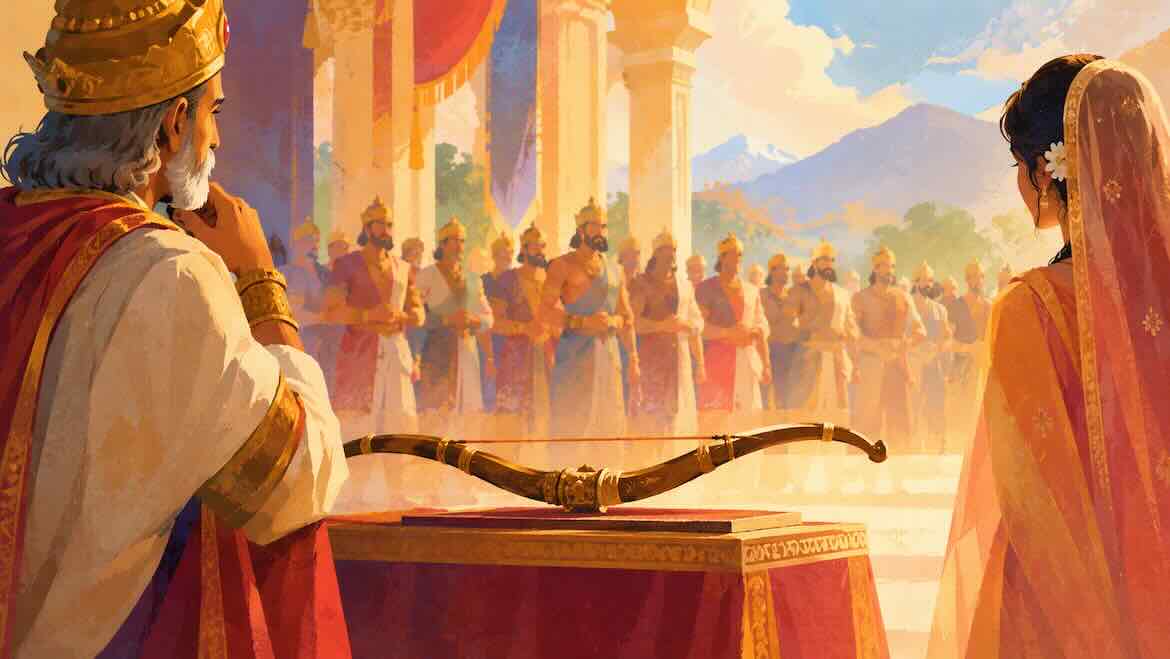
As Sita grew up and came of age, kings came to Mithila seeking her hand. Janak did not give her to any of them. Instead, he declared that her marriage would be based on virya shulka, meaning that the bridegroom's worth would be demonstrated through valour. He therefore set the condition that the man who could string Shiva's immense bow would marry Sita.
Many powerful kings gathered in Mithila to test themselves. Yet they could not even lift or move the bow. Some of them became angry and attacked Mithila, led by Sudhanva, the king of Sankashya. But Janak eventually received divine assistance and defeated them.
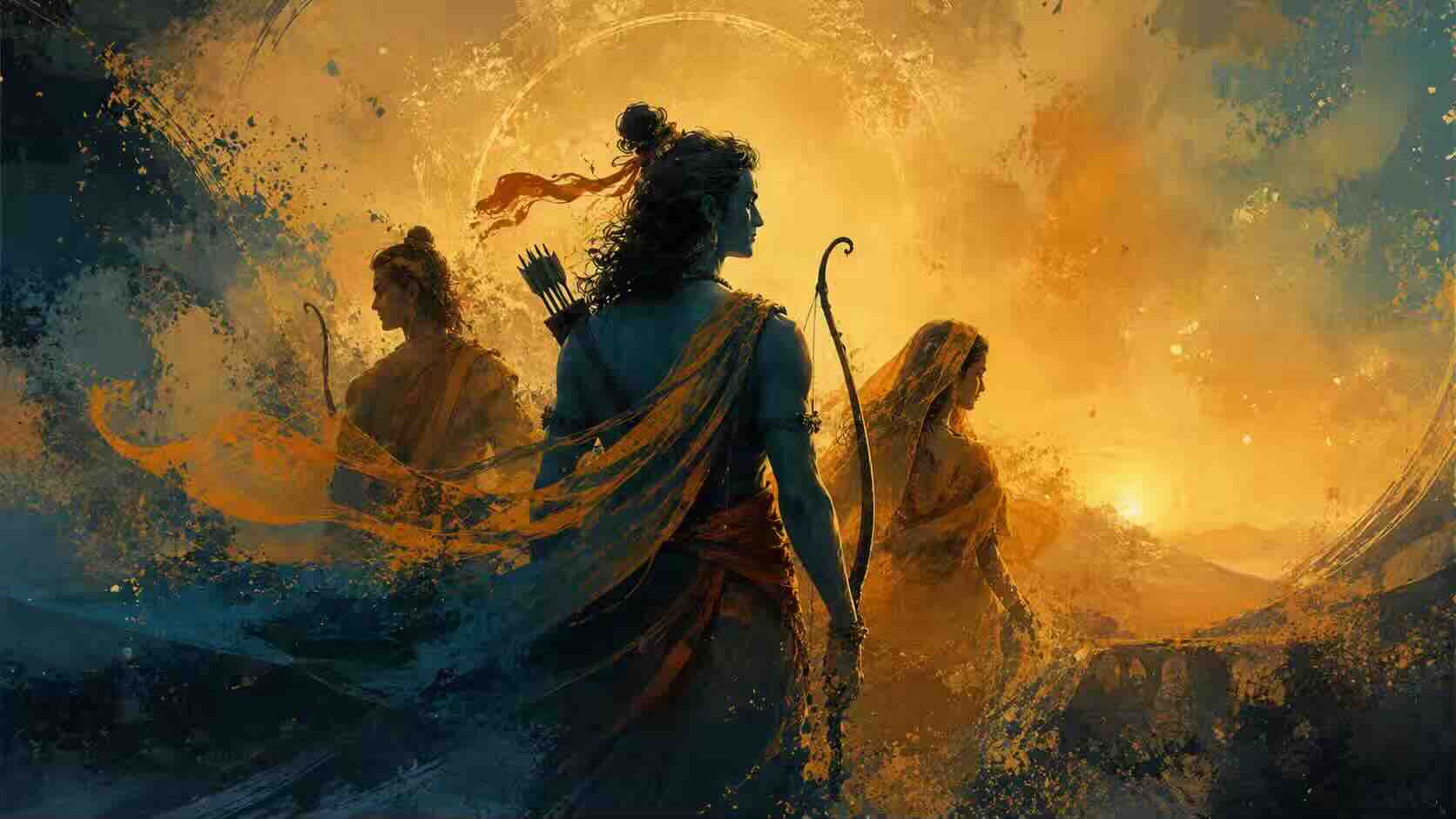
Later, when Sage Vishvamitra brought Ram and Lakshman to Mithila, Janak showed them the bow. At Vishvamitra's request, Ram approached it. The Valmiki Ramayan presents Ram as exceptionally powerful and divine. He lifted the bow and, while attempting to string it, broke it with a tremendous sound. Janak's vow had been fulfilled. He accepted Ram as the worthy bridegroom and sent messengers to Ayodhya to invite Dashrath for the marriage.
The popular expression "Sita's svayamvara" is therefore best understood with some care. Valmiki describes Janak's vow and the bow test rather than a conventional ceremony in which Sita personally selects one suitor from a line of candidates. Goswami Tulsidas's Ramcharitmanas, however, explicitly refers to the event as Sita's svayamvara.
Did You Know?
The Shiva bow was so difficult to move that Valmiki describes it as being brought in an eight-wheeled chest by five thousand men.
Why It Matters Today
Janak's decision highlights an enduring idea that important relationships should not be based only on status or appearance. He looked for qualities that he considered essential in a life partner, and he was willing to wait rather than compromise on his standard.
References
- Valmiki Ramayan
- Bal Kand, Sarga 66: Sita's origin, Janak's vow, the kings who sought her hand, and the condition involving Shiva's bow.
- Bal Kand, Sarga 67: The bow is brought before Rama, Rama breaks it, and Janak accepts him as Sita's bridegroom.
- Ramcharitmanas
- Bal Kand, Doha 252 and following Chaupais: Janak's statement, the reactions of the assembly and the bow challenge.
- Bal Kand, Doha 286 and Doha 292: Janak's gratitude after Rama breaks the bow and the description of Sita's svayamvara.