Quick Answer
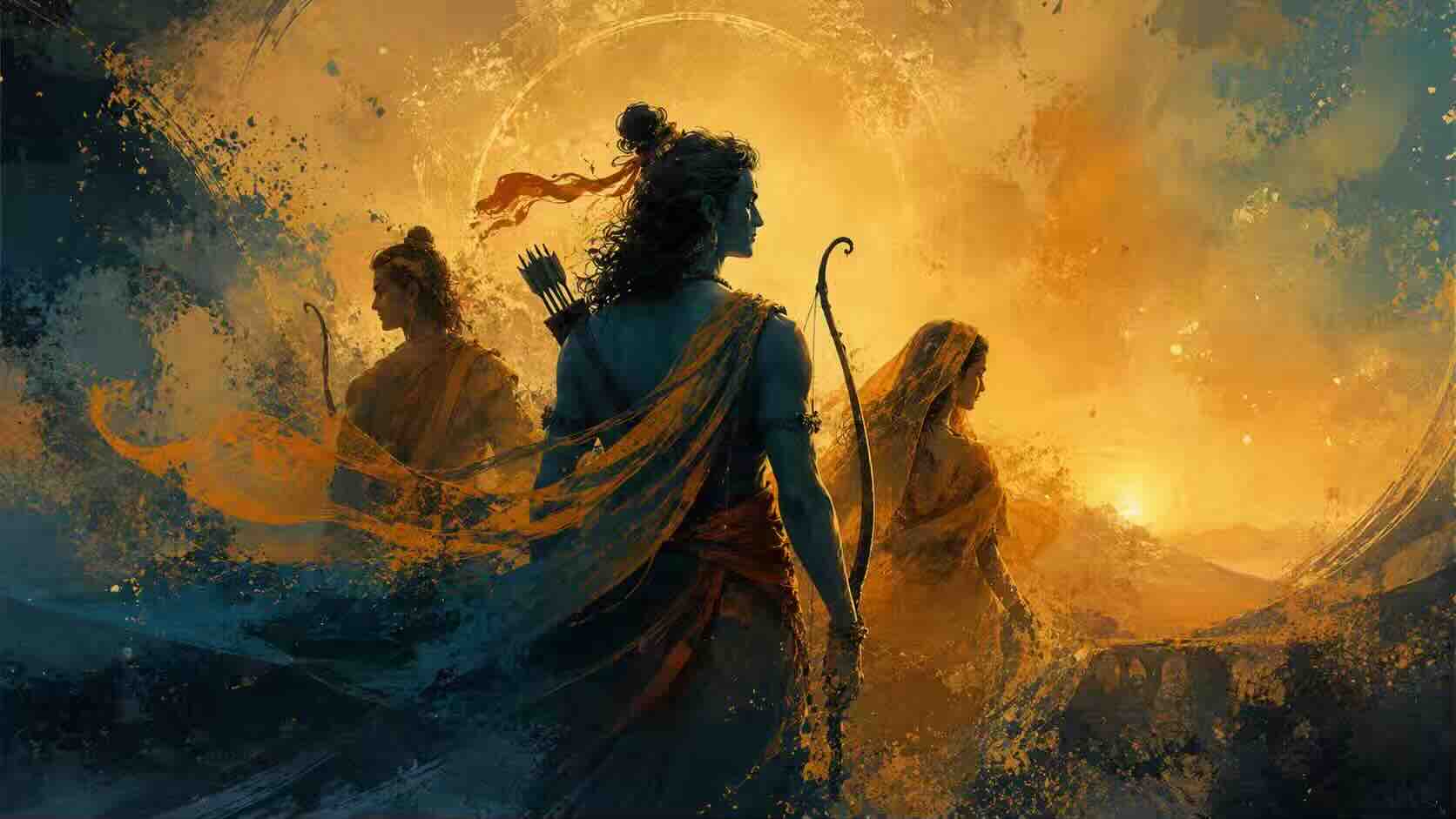
Queen Kaikeyi received two boons from King Dashrath after she courageously saved his life during a fierce battle against the demon Shambar. Impressed by her bravery and devotion, Dashrath promised to grant her any two wishes whenever she chose to claim them. Years later, Kaikeyi invoked these boons to send Ram into exile and secure the throne for Bharat.
The Story
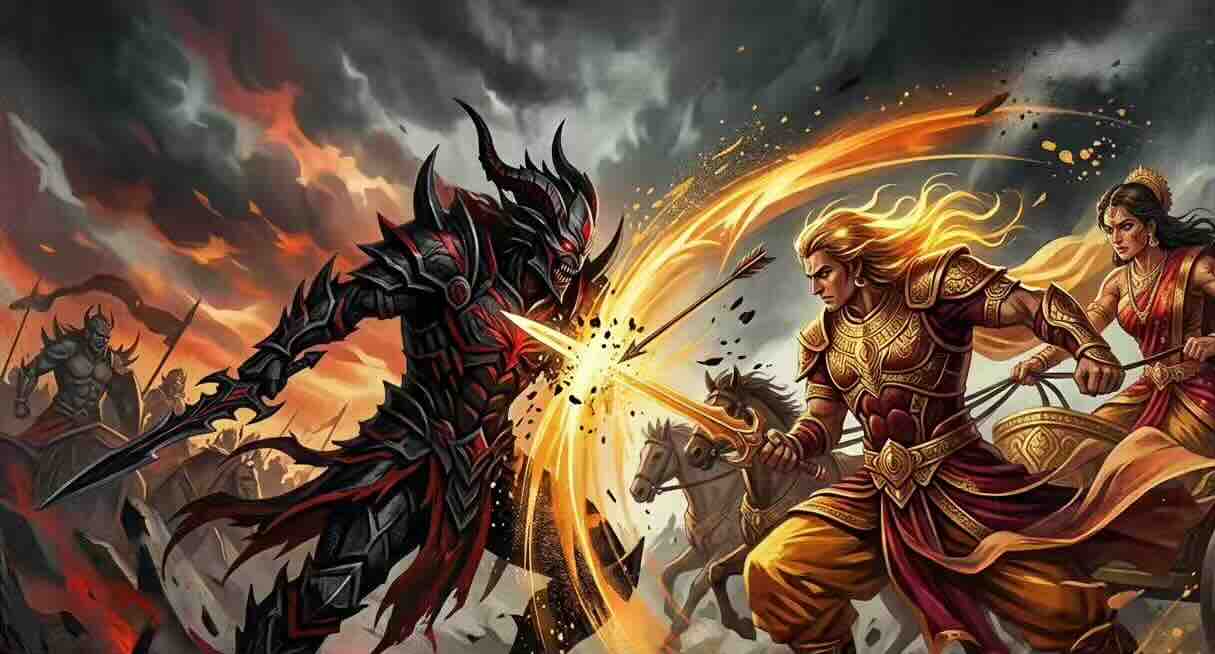
King Dashrath of Ayodhya was said to be as valiant in battle as Indra, the king of the gods. Before the birth of Lord Ram, Dashrath fought many battles alongside the gods against powerful asuras. One such conflict was fought at the city of Vaijayanta, located in the Dandak Forest of southern Bharat, against the mighty demon Shambar, whose strength posed a serious challenge to the gods.
Kaikeyi, the princess of the Kekaya kingdom and Dashrath's youngest queen, accompanied the king to the battlefield. Ancient Indian royal traditions occasionally describe queens accompanying kings during military campaigns, although such accounts are relatively uncommon.
According to the Valmiki Ramayan, Dashrath fought the battle with extraordinary valour, inflicting heavy losses on the enemy. However, as the fighting intensified, he was grievously wounded and eventually surrounded by the asura army. Exhausted and on the verge of being killed, the king could no longer defend himself. At that critical moment, Kaikeyi displayed remarkable courage and presence of mind. She skilfully drove Dashrath's chariot out of the enemy encirclement and carried him to safety. When the asuras tracked them down, she once again moved the wounded king to another secure hiding place. Throughout the night, she tended to his injuries and did everything possible to keep him alive until the danger had passed.
Deeply moved by her courage and selflessness, Dashrath offered Kaikeyi two boons. She chose not to claim them immediately, saying she would ask for them whenever the time was right.
Later Ramayan traditions add another famous episode to the same battle. According to these retellings, the axle pin of Dashrath's chariot broke in the heat of combat. Kaikeyi inserted her own hand into the wheel mechanism, holding the chariot together until it could be repaired, allowing Dashrath to continue fighting. Although this dramatic incident is one of the most popular stories associated with Kaikeyi, it is not found in the earliest available text of the Valmiki Ramayan.
Years later, after Ram's coronation had been announced, Kaikeyi's maid Manthara convinced her that Bharat's future would be endangered if Ram became king. Influenced by fear and insecurity, Kaikeyi demanded her two long-promised boons: Bharat's coronation and Ram's exile for fourteen years.
Did You Know?
- Kaikeyi was originally known for her bravery and skill in warfare, long before the events leading to Ram's exile.
- Dashrath's promise became one of the most consequential vows in Indian epic literature.
Why It Matters Today
Kaikeyi's story reminds us that a person's legacy is often shaped not only by their greatest acts of courage but also by the choices they make later in life. She was once celebrated as a brave queen who saved her husband's life, yet history remembers her primarily for a single decision.
The episode also highlights the importance of keeping one's promises. Dashrath honoured his word despite immense personal suffering, making his story a timeless example of duty and the weight of a vow.
References
- Valmiki Ramayan: Ayodhya Kand (critical edition and translations by Gita Press and Bibek Debroy).
- Mahabharat: Vana Parva (Ramopakhyana), translated by Bibek Debroy.
- Ramcharitmanas by Goswami Tulsidas (for later devotional tradition and character interpretation).