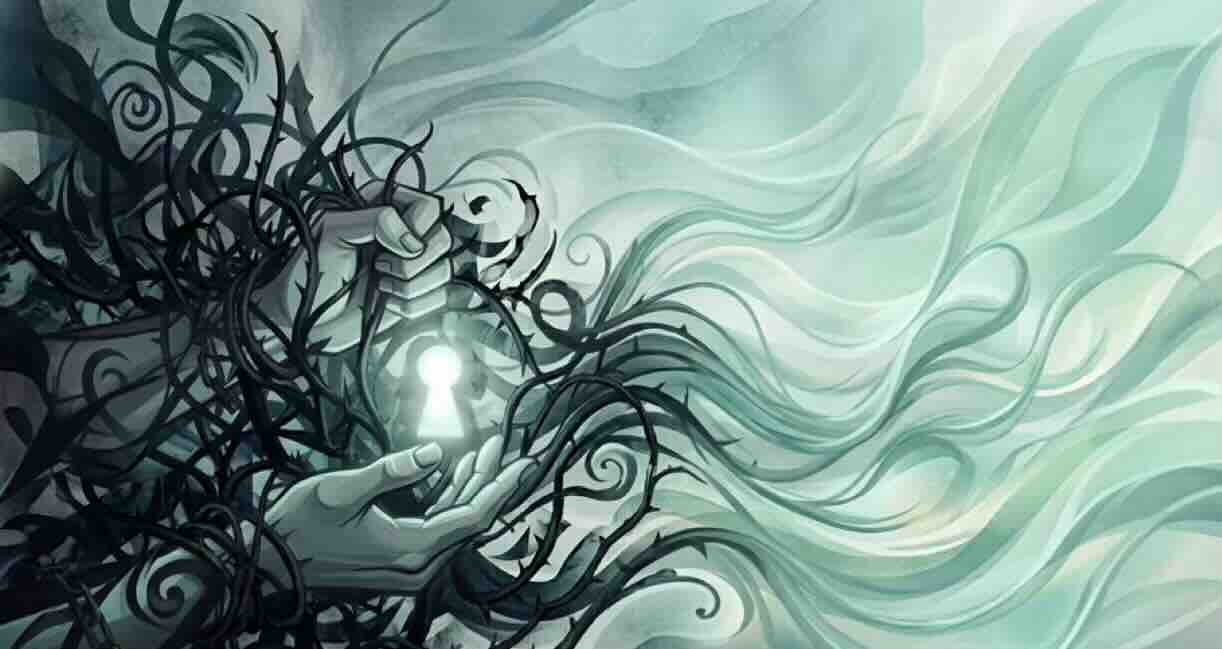
Reflection
Most people think letting go is about forgetting someone, moving on from a failure, or pretending something never mattered.
But that isn't what makes it difficult.
We struggle to let go because what we're holding onto is rarely just a person, a job, or a moment. We're often holding onto what it meant to us: a future we imagined, a version of ourselves we loved, or a hope that never became reality.
Sometimes we replay old conversations, revisit memories, or wonder how things could have been different. Not because we enjoy the pain, but because our mind is trying to make sense of something that still feels unfinished.
Letting go isn't about erasing the past. It's about slowly accepting that the past cannot be changed.
Understanding the Emotion
Our minds naturally seek closure. When something ends unexpectedly or without clear answers, it's common to keep searching for explanations.
Grief doesn't only follow the loss of a loved one. It can appear after the end of a friendship, a relationship, a career opportunity, or even a dream we quietly carried for years.
Attachment is also part of being human. We form emotional connections because we care. Holding on isn't a sign of weakness; it often reflects how deeply something mattered.
The challenge begins when holding on prevents us from fully living in the present.
Healing doesn't happen because we force ourselves to "move on." It often begins when we stop fighting our emotions and allow them to exist without letting them define our future.
A Different Perspective
What if letting go isn't about losing something, but about making space for something new?
This doesn't mean replacing memories or pretending the past wasn't meaningful. It means allowing your story to continue instead of believing it ended with one difficult chapter.
Some experiences stay with us forever. They shape us, teach us, and sometimes leave scars. But scars are not open wounds. They are reminders that healing, while imperfect, is possible.
Perhaps the goal isn't to stop remembering. Perhaps it's to remember without carrying the same weight.
One Small Practice
The next time you notice yourself replaying a painful memory, pause for a moment and ask yourself: "What am I hoping will change by replaying this?"
Don't judge your answer. Simply notice it.
Then take one slow breath and gently remind yourself: "I can honour what happened without living there forever."
You don't have to let go all at once. Healing begins with loosening your grip just a little.