Quick Explanation
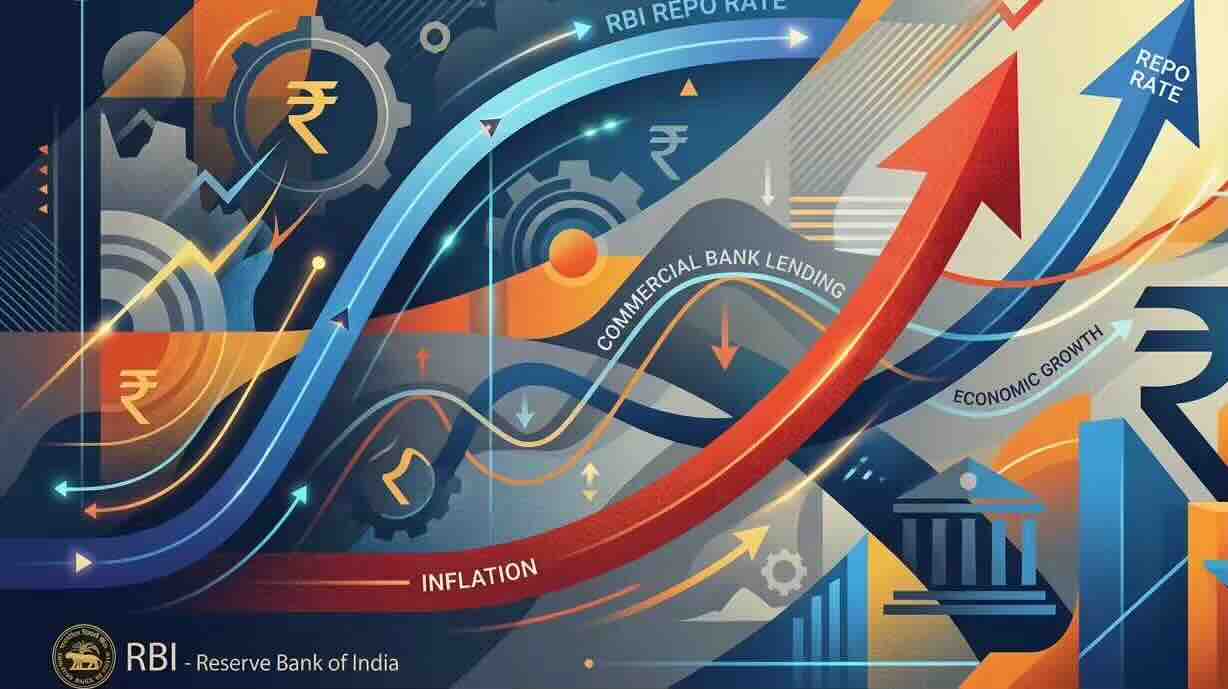
The repo rate is the interest rate at which the Reserve Bank of India (RBI) lends money to commercial banks for a short period.
When the RBI increases the repo rate, borrowing money becomes more expensive for banks. They usually pass this increased cost to customers through higher loan interest rates. This helps reduce spending and control inflation.
When the RBI decreases the repo rate, banks can borrow money at a lower cost. This often leads to cheaper loans, encouraging people and businesses to spend and invest more.
Simply put:
- Higher repo rate → Less borrowing → Lower spending → Helps control rising prices
- Lower repo rate → More borrowing → More spending → Supports economic growth
How It Works
Think of the RBI as the manager of the economy's money supply. During periods when prices rise too quickly, too much money may be circulating in the market. People have more purchasing power, but supply may not increase at the same pace, causing prices to rise.
To slow this down, the RBI increases the repo rate. Higher borrowing costs encourage banks, businesses, and individuals to be more careful with spending.
On the other hand, during slow economic periods, businesses may hesitate to invest, and people may reduce spending. The RBI may lower the repo rate to make loans cheaper and encourage economic activity.
The RBI takes these decisions through its monetary policy process, considering factors like inflation, economic growth, and global conditions.
The repo rate is reviewed according to the schedule of the Monetary Policy Committee (MPC) meetings. The MPC meets at least four times a year, but in practice it usually meets six times a year (roughly once every two months) to review the economic situation and decide whether to:
- Increase the repo rate
- Decrease the repo rate
- Keep it unchanged
Why It Matters
Repo rate decisions affect almost everyone, even those who do not directly take loans. They influence:
- Home loan and personal loan interest rates
- Business investments
- Savings returns
- Prices of goods and services
- Overall economic growth
Understanding the repo rate helps people make better financial decisions and understand how economic policies shape everyday life.
References
- Reserve Bank of India (RBI): Monetary Policy Framework
- RBI Monetary Policy Reports
- Indian Economy concepts from NCERT Economics textbooks