Quick Answer
Shravan Putrada Ekadashi is observed on the 11th lunar day (Ekadashi) of the bright fortnight (Shukla Paksha) of Shravan. It is dedicated to Lord Vishnu and is traditionally associated with the blessing of children and family welfare.
The word Putrada traditionally means "giver of a son." However, in contemporary understanding, the observance is often viewed more broadly as a prayer for healthy children and responsible parenthood.
The Story
The traditional story of Shravan Putrada Ekadashi is narrated through a dialogue between Lord Krishna and King Yudhishthir in the Bhavishya Purana.
Long ago, King Mahijit ruled the prosperous kingdom of Mahishmati. He was known as a capable and righteous ruler, yet he remained deeply troubled because he had no child.
His ministers and learned advisers searched for an answer. Eventually, they approached the sage Lomash, who discovered the cause through his spiritual insight.
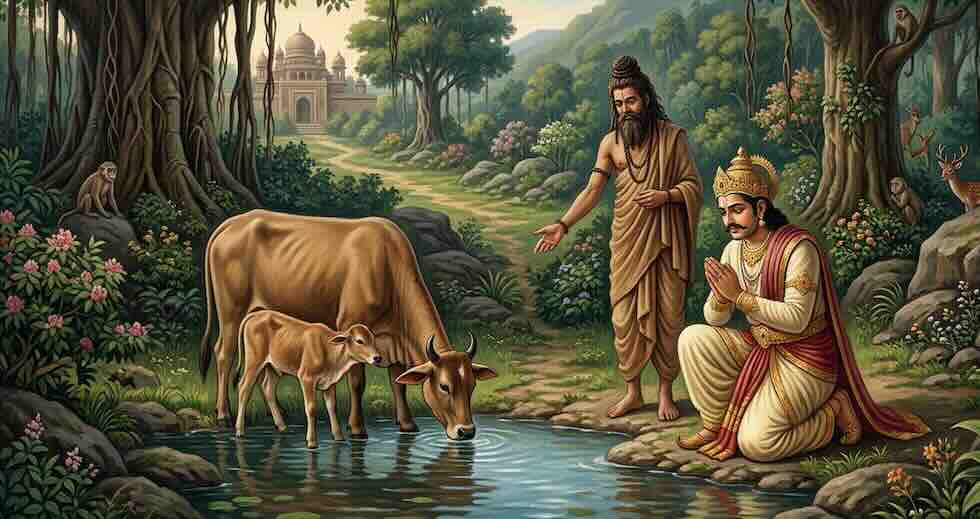
In a previous birth, Mahijit had been a poor merchant. One day, while extremely thirsty, he reached a water reservoir where a cow and her calf were drinking. He drove them away and drank the water himself. According to the story, this act of denying water to a thirsty animal became the karmic cause of his childlessness. His observance of Ekadashi in that previous life, however, contributed to his later birth as a king.
Lomash advised the king's subjects to observe Shravan Putrada Ekadashi and dedicate the spiritual merit of their observance to Mahijit. They followed his instructions. Eventually, the queen gave birth to a son.
The story therefore connects the Ekadashi with repentance, compassion, collective prayer, and the belief that actions have consequences.
Did You Know?
There are two Putrada Ekadashis in the Hindu lunar calendar: one in Shravan Shukla Paksha and another in Paush Shukla Paksha. Shravan Putrada Ekadashi is also known as Pavitropana or Pavitra Ekadashi, particularly in some Vaishnav traditions.
Why It Matters
The tradition reflects the importance ancient Indian society placed on family continuity and children. But its ethical message reaches beyond the desire for an heir.
The story reminds us that even a seemingly small act of cruelty can have consequences. For modern families, the observance can be understood as a time to pray for the health and well-being of children, rather than focusing only on gender.
References
- Bhavishya Purana
- Uttar Parva, account of Shravan Putrada Ekadashi and the story of King Mahijit, Sage Lomash, and the observance of the Ekadashi. The tradition presents the account as a dialogue between Lord Krishna and King Yudhishthir.
- Mahabharat
- The broader narrative framework of Krishna instructing Yudhishthir is consistent with the epic tradition, although the specific Mahijit-Putrada Ekadashi story belongs to the Bhavishya Purana.