Quick Answer
Hariyali Teej falls on the third day of the Shukla Paksha of Shravan, usually during the monsoon season, when the earth becomes green and fertile after the summer heat. The festival is associated with Goddess Parvati's reunion with Lord Shiva, symbolising love, devotion, prosperity, and the life-giving power of nature that the rains bring.
The Story
Goddess Parvati performed intense penance for many births to obtain Lord Shiva as her husband. Her devotion was finally rewarded, and their union became a symbol of steadfast love and spiritual commitment. Hariyali Teej commemorates this auspicious reunion.
The timing of the festival is deeply connected to the monsoon landscape. After months of scorching heat, the first rains transform fields, forests, and villages into vibrant shades of green. Hariyali literally means greenery. In agrarian India, this was a season of hope, as crops began to grow and water sources were replenished.
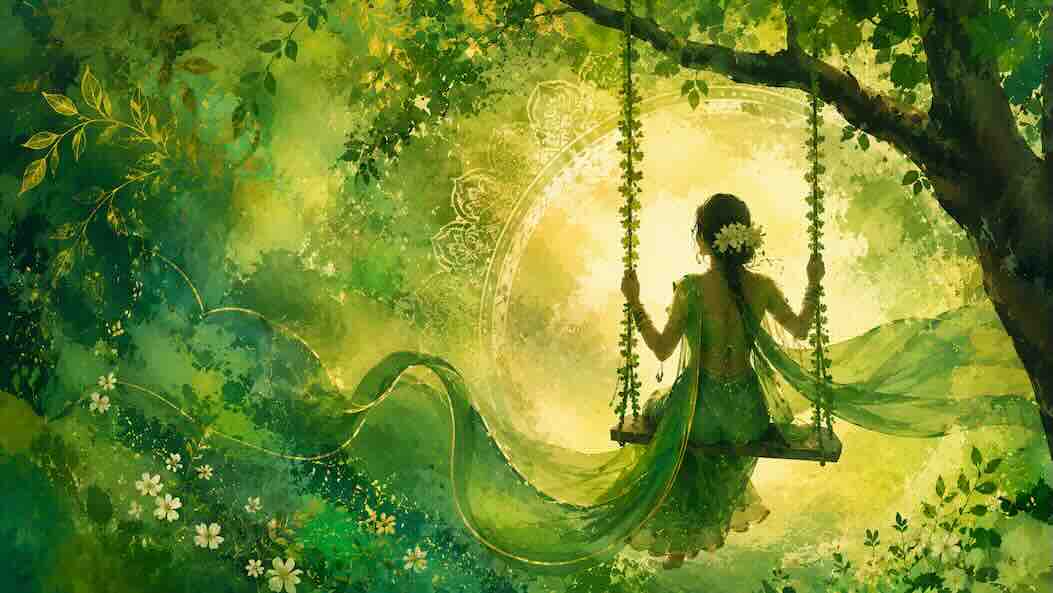
Women traditionally wear green clothes, apply mehndi (henna), sing seasonal songs, and celebrate on decorated swings hung from trees. These customs are not merely festive; they reflect joy in the rejuvenation of the natural world. The swing itself is often interpreted as a poetic symbol of the rhythm of clouds, rain, and human emotions during the rainy season.
Thus, Hariyali Teej is both a spiritual celebration of Shiva and Parvati and a cultural celebration of the monsoon's arrival.
Did You Know?
- Hariyali Teej is mainly celebrated in Rajasthan, Uttar Pradesh, Haryana, Madhya Pradesh, and Bihar.
- In Jaipur and Udaipur, grand Teej processions featuring traditional decorations and cultural performances attract thousands of visitors.
- Green bangles and green attire are considered symbolic of prosperity, fertility, and the freshness of the monsoon season.
Why It Matters
Hariyali Teej highlights an important aspect of Indian civilisation: festivals were closely linked to seasonal cycles.
- It encourages gratitude for rain, water, and agricultural abundance.
- It strengthens family and community bonds through shared rituals and celebrations.
- It preserves folk music, dance, and regional traditions of North and Western India.
- It reminds younger generations that Indian festivals often carry an ecological message alongside their religious meaning.
In an age of environmental concern, Hariyali Teej offers a gentle reminder that human well-being depends on the health of the natural world.
References
- Shiva Purana: Rudra Samhita, sections describing the marriage of Lord Shiva and Goddess Parvati.
- Skanda Purana: references to Shravan month observances and the sacredness of the rainy season in Hindu tradition.
- Padma Purana: discussions on seasonal vrata (vows) and the religious importance of Shravan.
- Other traditional sources: North Indian Teej folk traditions and regional ritual practices preserved through Rajasthan and Uttar Pradesh cultural traditions. The current customs of Hariyali Teej, such as swings, mehndi, green clothing, and regional songs, are not found collectively in any single ancient text. Many of these traditions have evolved and been preserved over generations through regional folk culture.