Quick Answer
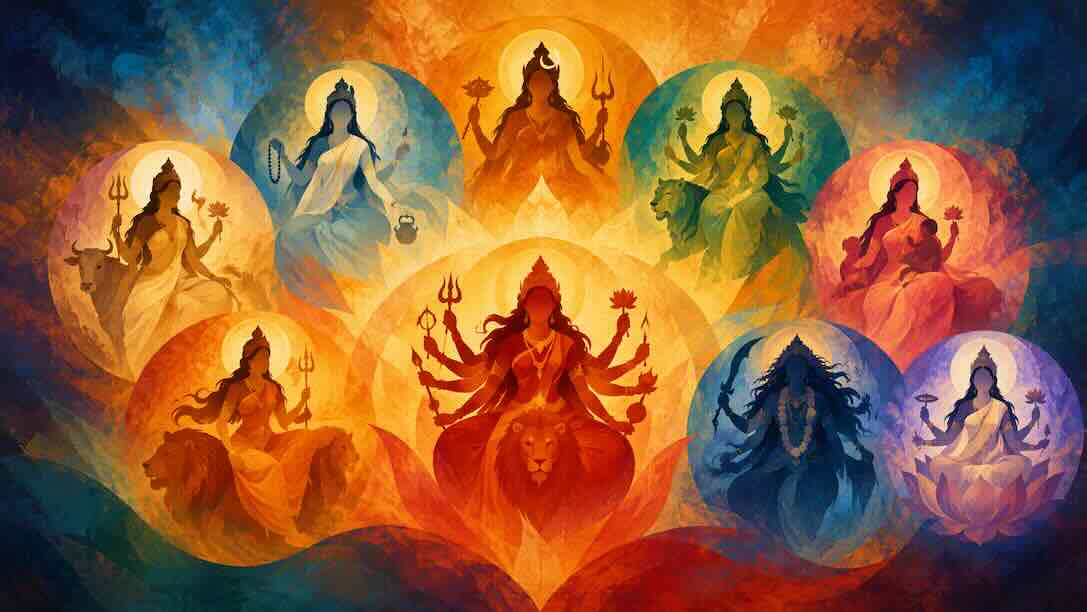
The nine forms of Maa Durga are collectively known as Navdurga. Worshipped during the nine days of Navratri, they are Shailputri, Brahmacharini, Chandraghanta, Kushmanda, Skandamata, Katyayani, Kalaratri, Mahagauri and Siddhidatri. Each form has distinctive stories, symbols and spiritual significance. For more on why the festival is observed over nine nights, read why Sharad Navratri lasts nine nights.
The Story
Navdurga represents nine manifestations of the Divine Mother in Hindu tradition. Each day of Navratri is associated with one form, following the commonly observed sequence.
Maa Shailputri: The daughter of the mountain king, Himavan, Shailputri is associated with Parvati. Riding a bull and carrying a trident and lotus, she represents strength and a firm foundation.
Maa Brahmacharini: This form recalls Parvati's intense penance to attain Lord Shiva as her husband. Carrying a rosary and a water pot, she represents devotion and discipline.
Maa Chandraghanta: Recognised by the crescent-shaped bell on her forehead, she is depicted riding a tiger or lion. Her form represents courage and readiness to confront evil.
Maa Kushmanda: According to popular devotional tradition, her smile illuminated the universe when darkness prevailed. Depicted with eight arms, she represents creative energy and the power of the cosmic mother.
Maa Skandamata: The mother of Skanda, also known as Kartikeya, she is often shown holding her son. She represents maternal love and compassion.
Maa Katyayani: Associated with the sage Katyayana, this warrior form is worshipped for her role in defeating the buffalo demon Mahishasura in Hindu tradition. She represents courage and the triumph of righteousness.
Maa Kalaratri: Her dark appearance and fierce expression symbolise the destruction of fear and evil. Despite her fearsome form, she is regarded as a protective and benevolent mother.
Maa Mahagauri: Depicted in white garments and associated with purity and tranquillity, Mahagauri represents forgiveness and spiritual renewal.
Maa Siddhidatri: The final form is associated with siddhis, or spiritual perfections and extraordinary attainments. Seated on a lotus or depicted with a lion, she represents wisdom and divine grace.
Together, these nine forms present different expressions of Shakti, the divine feminine power. Their imagery and stories vary across texts, regions and devotional traditions, but all are honoured as manifestations of the Goddess.
Did You Know?
- The names and sequence of Navdurga are given in the Devi Kavacham, associated with the Durga Saptashati.
- Shailputri means "daughter of the mountain", while Skandamata means "mother of Skanda".
- Kalaratri looks fearsome but is worshipped as a compassionate protector who removes fear.
- Navratri traditions differ across India. For example, explore Garba during Navratri in Gujarat and why Mahalaya marks the beginning of Durga Puja in Bengal.
Why It Matters
The nine forms remind us that strength has many expressions. Patience helps us endure difficulties, courage enables us to face injustice, and compassion guides us to protect others. Whether approached through devotion, cultural heritage or symbolism, Navdurga offers a meaningful way to reflect on the different qualities needed to live responsibly.
References
- Devi Kavacham, verses 3-5, associated with the Durga Saptashati, for the names and sequence of the nine forms.
- Devi Mahatmya, chapters 2-4, within the Markandeya Purana, for the traditional account of the Goddess's battle with Mahishasura.