Quick Answer
Goddess Ganga did not drown her seven sons out of cruelty or indifference. According to the Mahabharat, the seven infants were actually Ashta Vasus, divine beings who had been cursed by Sage Vasishtha to be born as humans. By immersing them in the sacred waters immediately after birth, Ganga released them from their earthly existence and freed them from the curse. It was an act of compassion, not punishment.
The Story
The answer to this mystery begins long before King Shantanu met Goddess Ganga.
The Ashta Vasus were eight celestial deities associated with the natural elements and cosmic order. They were known as Dhar, Dhruv, Som, Aha, Anil, Anal, Pratyush, and Prabhas.
One day, the wife of Prabhas, the youngest of the Vasus, saw Nandini, the miraculous cow of Sage Vasishtha. She wished to possess the divine cow and persuaded her husband to obtain it for her. Prabhas sought the help of the other seven Vasus, and together they took Nandini from the sage's hermitage.
When Sage Vasishtha discovered the theft, he became deeply displeased. Although the Vasus were divine beings, they had knowingly committed adharma by stealing the property of a great sage.
The sage cursed all eight Vasus to be born on Earth as mortals.
Realising the gravity of their mistake, the Vasus immediately sought forgiveness. Moved by their sincere repentance, Vasishtha softened the curse. He declared that seven of the Vasus, who had only assisted in the theft, would be released from human life almost immediately after birth. However, Prabhas, who had initiated the act, would have to live a complete human life and experience the responsibilities and challenges of mortal existence.
The Vasus then approached Goddess Ganga and requested her to become their mother so that the curse could be fulfilled with the least possible suffering.
When Ganga later took human form and married King Shantanu, she fulfilled her promise.
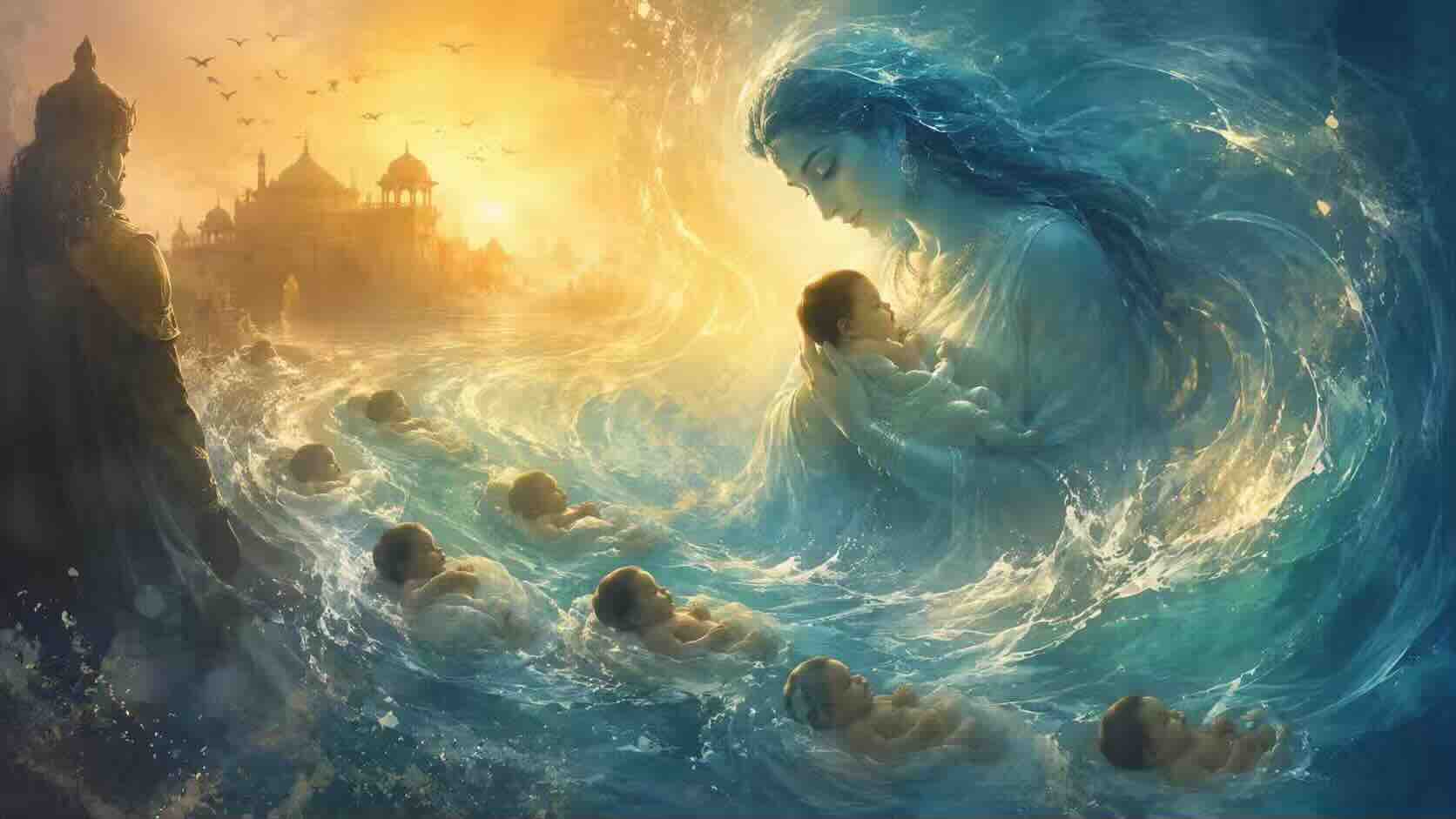
As each of the first seven children was born, she immersed the newborn in the sacred River Ganga. To human eyes, the act appeared heartbreaking. But she was actually releasing the seven Vasus from their brief earthly birth and restoring them to their divine state.
Thus, what seemed like a tragic act was, in reality, the completion of a divine promise and the fulfilment of Sage Vasishtha's modified curse.
Did You Know?
- The Ashta Vasus are Vedic deities associated with different aspects of nature and the universe.
- Sage Vasishtha's cow, Nandini, was believed to possess divine and miraculous powers.
- The eighth Vasu was later born as Devavrat, who became the legendary Bhishma.
Why It Matters Today
This episode reminds us that ancient Indian scriptures often present events from two perspectives: what humans see and the larger cosmic purpose behind them.
The story also emphasises the principle of karma. Even celestial beings were accountable for their actions. Yet it also highlights another important truth: genuine repentance and compassion can lessen the consequences of one's mistakes.
Above all, the story encourages us not to judge every event by appearances alone. Sometimes, understanding the complete context changes the meaning of an entire story.
References
- Mahabharat: Adi Parva
- Sambhava Parva (Narrative of the Ashta Vasus, the theft of Nandini, Sage Vasishtha's curse, and the births of Ganga's sons; chapter numbering varies by edition, commonly Chapters 95-100)
- Mahabharat (Critical Edition, Bhandarkar Oriental Research Institute): Adi Parva
- Vishnu Purana: References to the Ashta Vasus and their genealogy